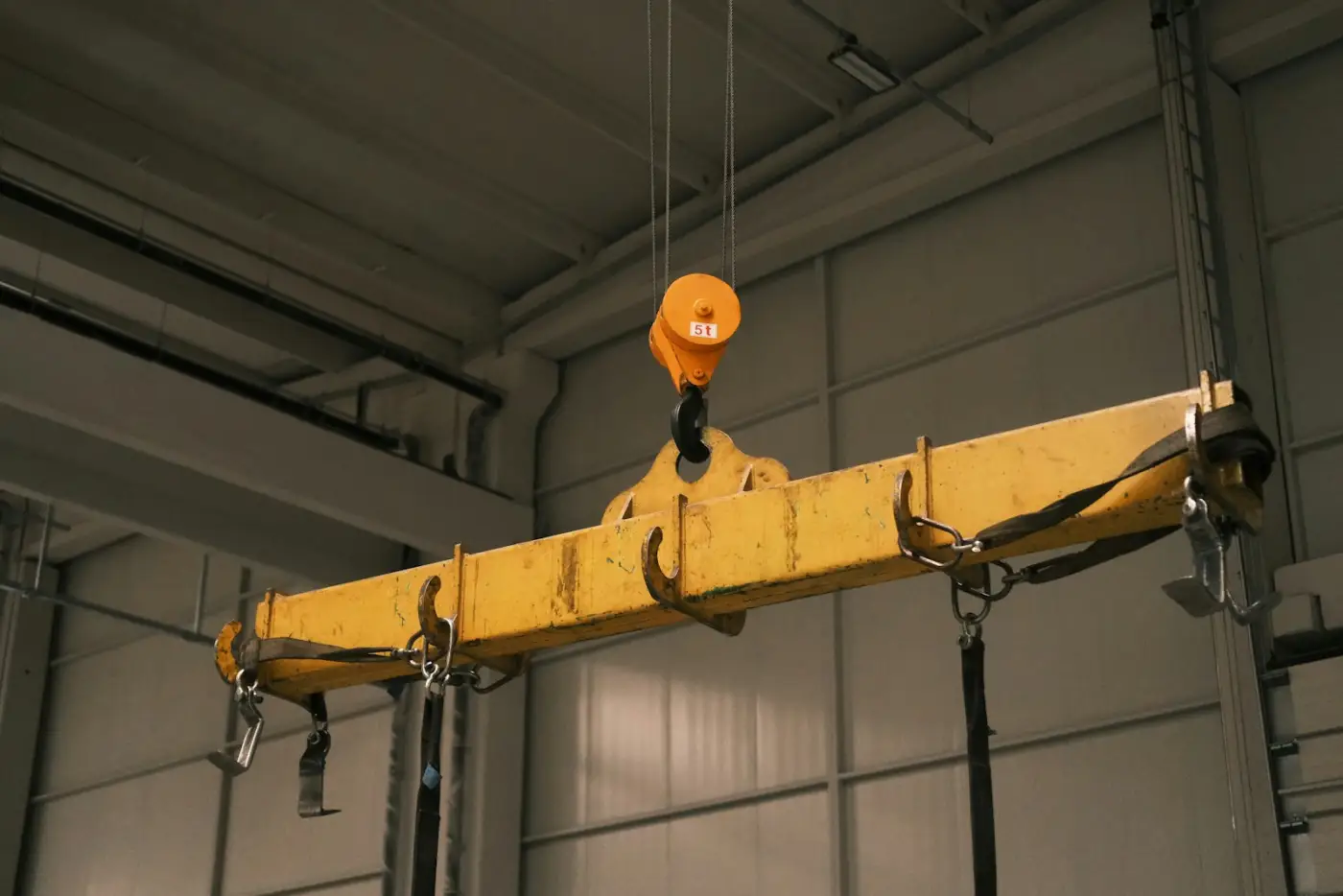
Certified lifting belts in Dubai for every lift
"Lifting belt" is what most UAE sites call a polyester webbing sling. Alongside them, riggers use round slings, chain slings and shackles, and every one of these needs a readable label and a certificate before it goes on the hook. We sell and rent certified lifting belts in Dubai and the accessories that go with them, ready for crane, HIAB and boom loader work.
We supply:
- Webbing slings (flat lifting belts): single and double ply, with flat or reinforced eyes, and endless types;
- Round slings: a polyester core inside a protective sleeve, kind to finished and painted loads;
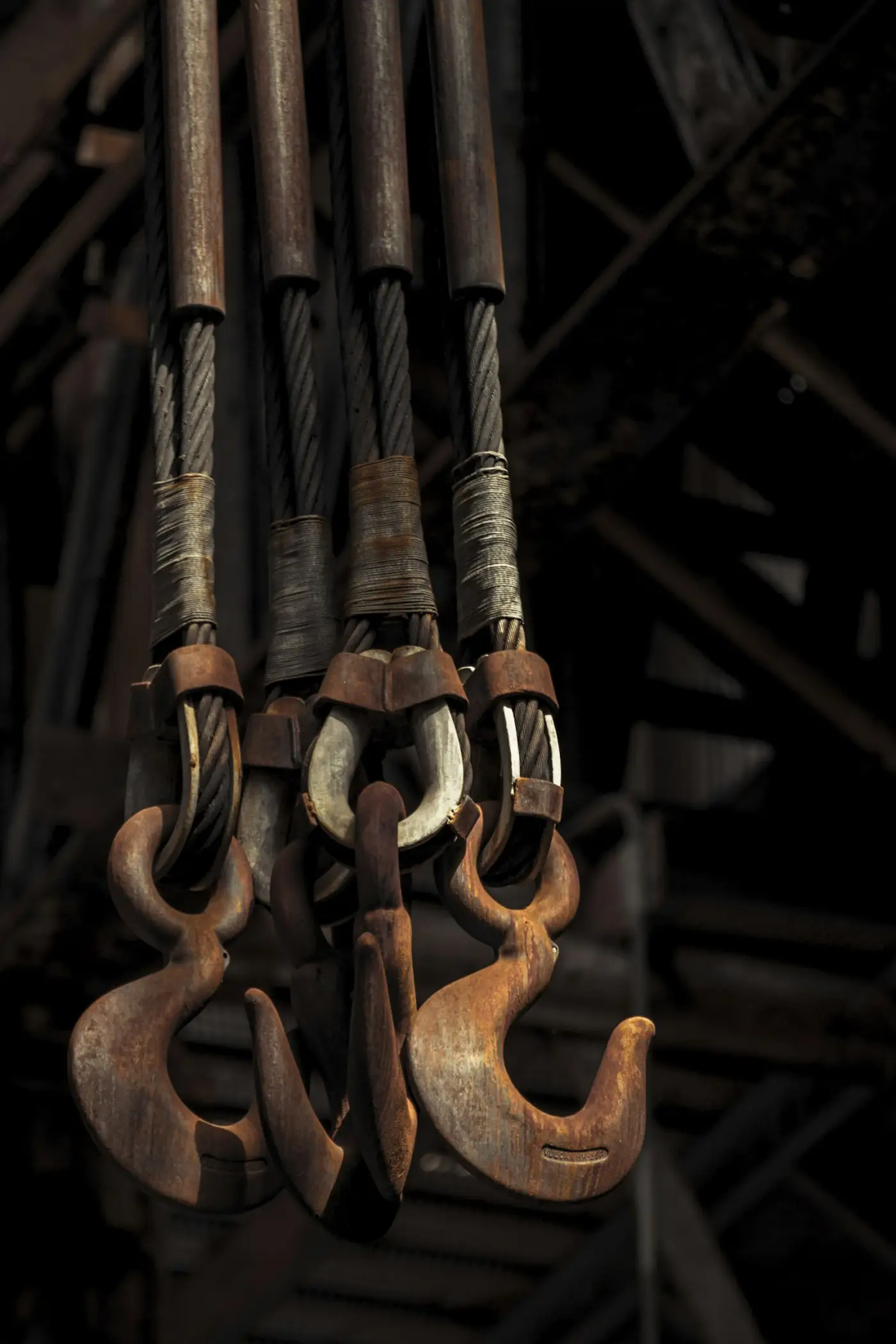
- Chain slings: single, two, three and four-leg assemblies with hooks, for heavy, hot or abrasive loads;
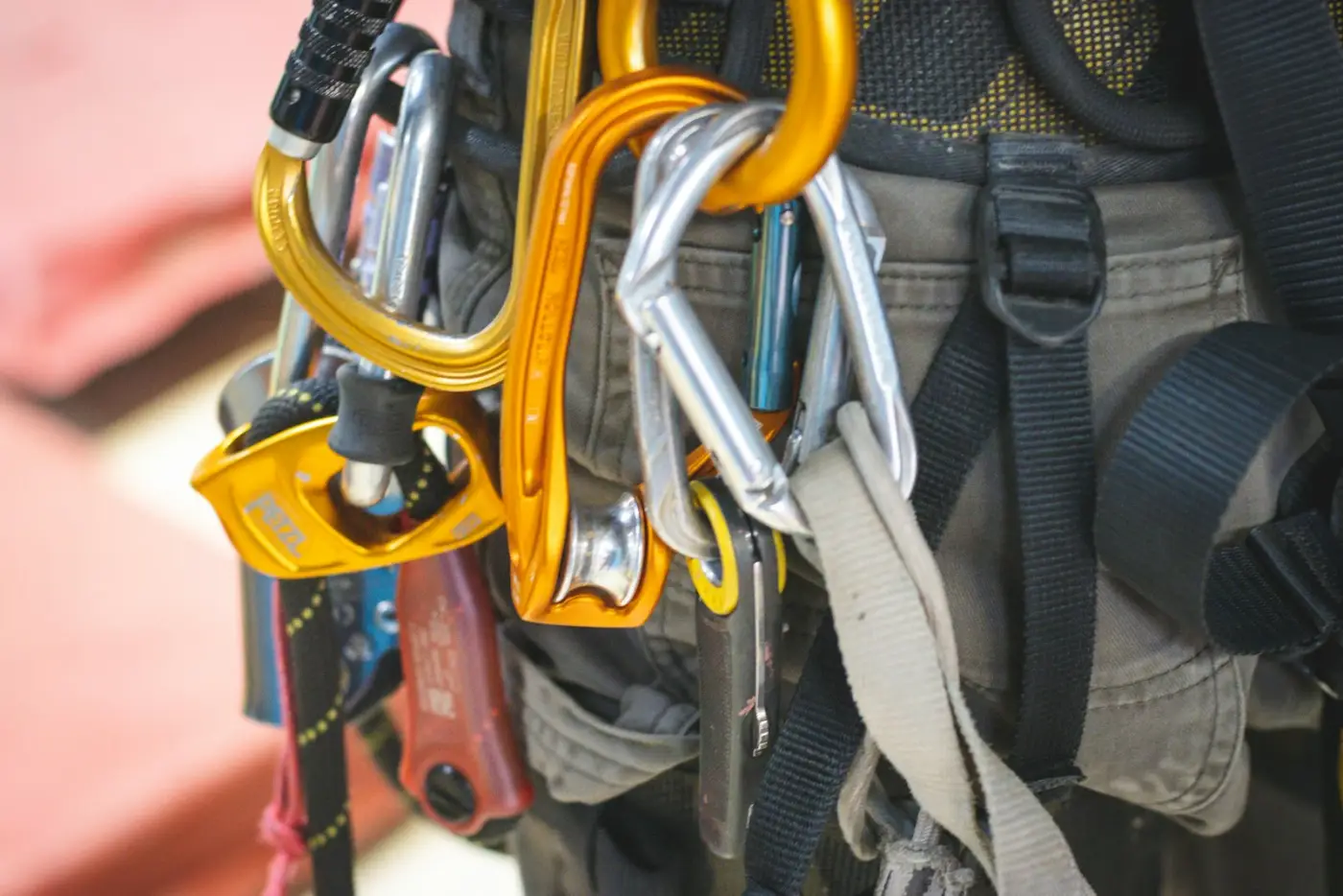
- Shackles: bow and D shackles in a range of WLLs to connect slings to loads and hooks;
- Ratchet straps: for securing loads on trucks and trailers during transport (not for lifting).
Buy for regular lifting work and your own rigging store. Rent for a single lift, a shutdown, or when a job needs a sling size you do not keep.
Lifting sling colour code and WLL
Polyester webbing slings made to EN 1492-1, and round slings made to EN 1492-2, use a colour code so the rigger can see the capacity class at a glance. The colour shows the working load limit (WLL) for a straight vertical lift:
| Colour | WLL, straight lift |
|---|---|
| Violet | 1 tonne |
| Green | 2 tonnes |
| Yellow | 3 tonnes |
| Grey | 4 tonnes |
| Red | 5 tonnes |
| Brown | 6 tonnes |
| Blue | 8 tonnes |
| Orange | 10 tonnes and above |
The colour is a quick guide only. The label is what counts: it shows the WLL, the material, the length, the standard and the manufacturer. A sling with a missing or unreadable label must not be used. Our article on lifting sling colour codes and safe working load explains the system in more detail.
How the hitch changes the WLL
The same sling carries a different load depending on how it is rigged. Typically, a choke hitch reduces capacity to around 80% of the straight-lift WLL, while a basket hitch with vertical legs can roughly double it. Angles between legs reduce capacity further as they widen. Always use the manufacturer's WLL table on the label or certificate for the actual hitch and angle.
Choosing the right sling
Webbing slings
Light, flexible and gentle on the load. Good for steel sections, pipes and general site lifts. Protect them from sharp edges with sleeves or corner pads, because a cut sling can fail suddenly.
Round slings
Soft and easy to wrap around awkward loads. The outer sleeve protects the load-bearing core, but if the sleeve is cut and the core is visible, the sling must be withdrawn.
Chain slings
Made to EN 818-4 in grade 8 (and similar higher grades), chain slings handle heavy loads, high temperatures and rough surfaces that would damage textile slings. Multi-leg slings with a master link suit balanced lifts of panels, skips and machinery. Check each leg's tag for the WLL at the leg angle you plan to use.
Shackles
Use the right shackle for the job: bow shackles where several slings meet, D shackles for straight in-line pulls. The pin must be fully screwed home, and the shackle's WLL must be at least equal to the load it carries.
Ratchet straps are not lifting slings
Ratchet straps (lashing straps to EN 12195-2) are designed for securing loads in transport. They are rated for lashing capacity, not lifting, and must never be used to lift a load.
Inspection: before each use and periodically
Riggers should check every sling and shackle before each lift:
- label present and readable;
- no cuts, tears, burns, abrasion or chemical damage on webbing or round slings;
- stitching intact, especially at the eyes;
- chain links free of stretch, cracks, gouges, bending or heavy corrosion;
- hooks with working safety latches and no opening of the throat;
- shackles straight, with correctly fitting pins.
Any damaged or doubtful item goes into quarantine and is not used. In addition, lifting accessories need a thorough examination by a competent person at regular intervals; on most UAE sites this is done by a third-party inspection (TPI) company, and many sites expect it at least every six months. Check the interval your site's HSE plan or main contractor sets.
Choosing a sling: what to tell us
To recommend the right lifting belt or sling, we need a few details about the lift:
- Load weight, from the drawing, delivery note or manufacturer's plate, not a guess;
- Load shape and size, and where the lifting points or centre of gravity are;
- Surface: painted, coated, sharp-edged, hot or oily;
- Hitch you plan to use: straight, choke or basket, and the number of legs;
- Headroom available under the hook, which limits sling length and leg angle;
- Lifting machine: crane, HIAB, boom loader or chain block.
With that we can suggest the sling type, WLL and length, plus any shackles and edge protection. Final selection and the lift plan remain the responsibility of your appointed person or lifting supervisor on site.
What comes with each sling
Whether you buy or rent, each item comes with:
- the manufacturer's certificate of conformity or test certificate, showing WLL and standard;
- an inspection record linked to the item's identification number;
- the WLL label or tag on the item itself.
Rented slings and shackles are inspected before they go out and when they return. Damaged items are taken out of service and not hired again.
Slings with cranes, operators and training
If you are hiring a mobile crane, spider crane or boom loader from us, add the slings and shackles to the same order and the certificates arrive with the machine's TPI paperwork. We can also supply certified operators with riggers and banksmen, and our rigging and slinging training teaches your own team to select, inspect and use these accessories.
We deliver from our Saih Shuaib 2 office, near Dubai Industrial City and Jebel Ali, to all seven emirates.
Order or rent certified lifting slings
WhatsApp +971 50 275 6789 or +971 54 590 9555, or email hire@apexprouae.com with the sling type, WLL, length and quantity, and whether you want to buy or rent. Office hours are Saturday to Thursday, 07:00 to 19:00.
Typical lifting accessories for sale or rent
| Item | Typical standard | Best for |
|---|---|---|
| Webbing sling (lifting belt) | EN 1492-1 | General lifts, steel sections, pipes |
| Round sling | EN 1492-2 | Painted or delicate loads, awkward shapes |
| Chain sling, 1 to 4 legs | EN 818-4 | Heavy, hot or abrasive loads; multi-point lifts |
| Bow and D shackles | EN 13889 | Connecting slings to loads and hooks |
| Ratchet strap (lashing) | EN 12195-2 | Securing loads in transport only, never lifting |
Figures are typical for each class, not a specific model. Tell us the height, load and ground conditions and we confirm the exact machine in writing.
Lifting Belts & Slings — FAQs
What do the colours on lifting belts mean?
On polyester webbing and round slings made to EN 1492, the colour shows the straight-lift WLL: violet 1 tonne, green 2, yellow 3, grey 4, red 5, brown 6, blue 8 and orange 10 tonnes and above. The colour is a quick guide; always read the WLL on the sling's label before lifting.
Can I rent lifting slings in Dubai instead of buying them?
Yes. APEX PRO rents webbing slings, round slings, chain slings and shackles as well as selling them. Each rented item comes with its certificate and inspection record and is checked before and after every hire. Renting suits one-off lifts, shutdowns or jobs that need a size you do not keep in stock.
What certificate comes with a lifting sling?
Each sling comes with the manufacturer's certificate of conformity or test certificate, showing the standard, WLL and identification, plus an inspection record. Your site may also need a current third-party (TPI) thorough examination certificate for lifting accessories; tell us when ordering and we will confirm what can be supplied.
How often should lifting slings be inspected?
Riggers should check slings and shackles visually before every use. A competent person should also carry out a thorough examination at regular intervals, which many UAE sites set at six months for lifting accessories. Your site's HSE plan or main contractor decides the interval, so check their requirement.
Can I use a ratchet strap to lift a load?
No. Ratchet straps are lashing equipment for securing loads during transport. They are rated for lashing capacity, not lifting, and the ratchet and hooks are not designed for lifting forces. Use a certified webbing sling, round sling or chain sling with the correct WLL for any lift.
Webbing sling or chain sling: which should I use?
Webbing and round slings are light and protect painted or delicate surfaces, making them the usual choice for general site lifts. Chain slings suit heavy, hot, sharp or abrasive loads that would cut or damage textile slings, and multi-leg chain slings make balanced multi-point lifts simpler.
When should a sling be thrown away?
Withdraw a sling if its label is missing or unreadable, or if it shows cuts, tears, burns, chemical damage, broken stitching or a visible round sling core. Withdraw chain slings with stretched, cracked or bent links, or hooks with opened throats. Damaged slings should be quarantined, not repaired on site.
Last updated