Full Body Harness Inspection Checklist: Pre-Use and Periodic Checks for UAE Sites
A step-by-step full body harness inspection checklist covering daily pre-use checks, periodic examination, records and when to take a harness out of service.
Why a full body harness inspection checklist matters
A full body harness is only as good as its last check. Webbing that looks fine from a metre away can hide a cut edge, a glazed patch from heat or a stitch line that has started to pull. In UAE conditions, where harnesses sit in hot site containers, ride in pickup beds and are worn in direct sun for hours, wear builds up faster than many crews expect. A short, consistent full body harness inspection checklist catches those faults before someone relies on the harness in a fall.
This guide sets out a practical checklist that site supervisors, HSE officers and the workers themselves can use. It covers the daily pre-use check, the detailed periodic inspection, what to record and when a harness must come out of service. It is general guidance: your harness manufacturer's instructions and your site's HSE plan always take priority.
Three levels of safety harness inspection
Most fall-protection programmes use three levels of check. The names vary from site to site, but the idea is the same.
| Check | Who does it | When | Recorded? |
|---|---|---|---|
| Pre-use check | The wearer | Every time, before putting it on | Usually not, unless the site requires it |
| Detailed (interim) inspection | Trained supervisor or competent person | At intervals set by the site, often more often in harsh use | Yes |
| Periodic examination | Competent person, often a third-party inspector | At least every 12 months under EN 365 guidance, or more often if the manufacturer says so | Yes, with a dated record or tag |
EN 365 is the European standard covering instructions, maintenance and periodic examination of personal fall-protection equipment. Guidance based on it calls for a periodic examination at least every 12 months, and more often where use is heavy or the environment is harsh. Many UAE sites set shorter intervals than that, so check what your main contractor requires.
Pre-use full body harness inspection checklist
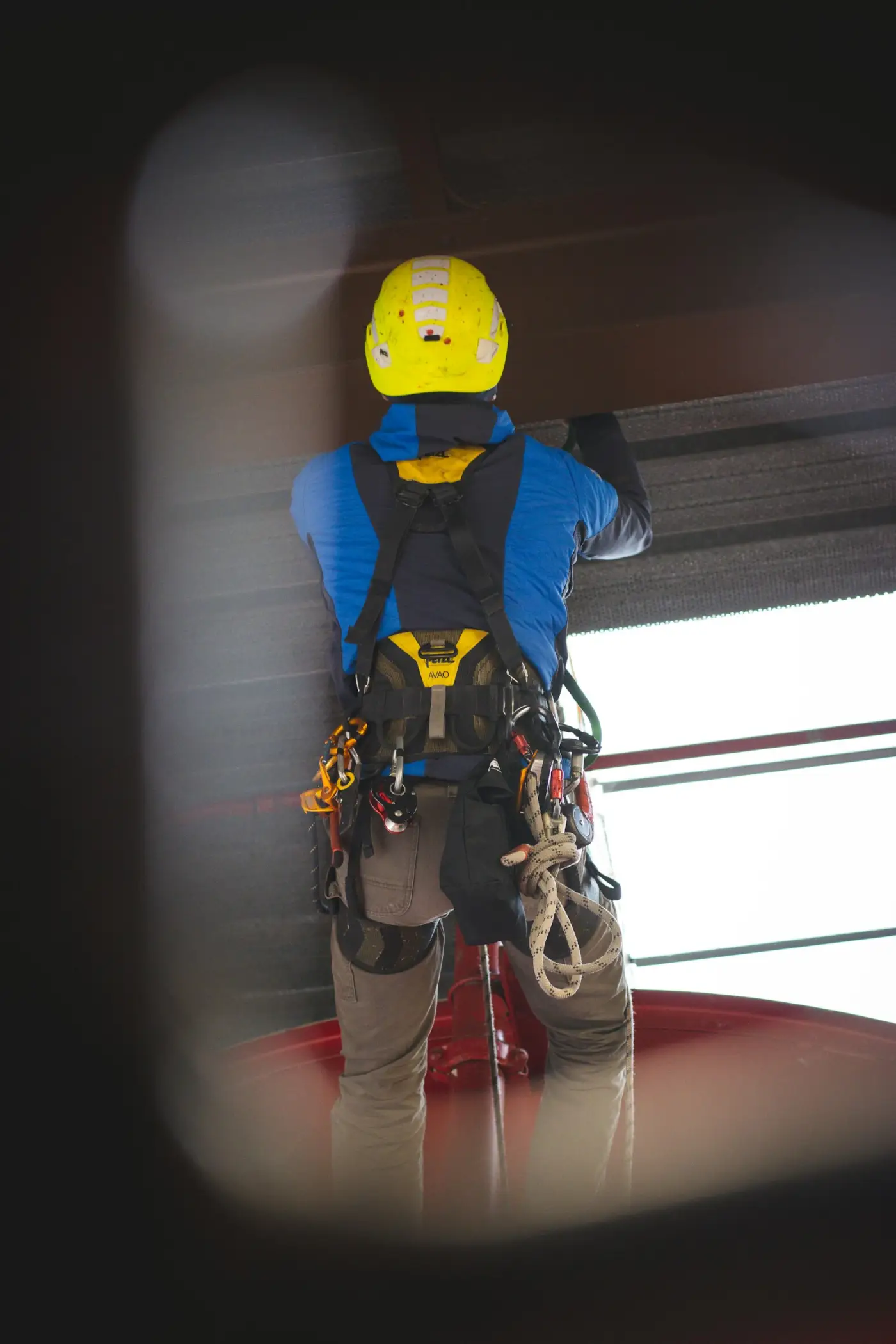
Do this in good light, with the harness off the body and laid out or held up so every strap can be seen. It takes two to three minutes once you are used to it.
1. Labels and identification
- The label is present and readable: manufacturer, standard (for example EN 361 for full body harnesses), serial or batch number and date of manufacture.
- The harness has an in-date inspection tag or record if your site uses them.
- It is the right size for the wearer.
If the label is missing or unreadable, the harness cannot be traced to its certificate. Take it out of use.
2. Webbing
Run every strap through your hands, bending it slightly into a curve so cuts and fibre damage open up.
- No cuts, nicks, tears or frayed edges.
- No burns, melted spots, weld spatter marks or hard, glazed areas.
- No chemical staining, paint contamination or stiffness.
- No fading or brittleness from UV. Sun-bleached webbing that feels dry or papery is a warning sign.
- No knots tied in the straps.
3. Stitching
- All stitch lines are complete, with no broken, pulled or cut threads.
- Contrasting-colour stitching (where used) shows no exposed core threads.
- Any fall-indicator stitching or tag is intact. If a fall indicator has deployed, the harness has arrested a fall and must be withdrawn.
4. D-rings and attachment points
- Dorsal (back) D-ring and any front or side rings are free of cracks, sharp edges, distortion and corrosion.
- D-rings sit in their correct position and the keeper holding the dorsal ring is in place.
- Textile attachment loops (where fitted) have no cuts or wear.
5. Buckles and adjusters
- Buckles are not bent, cracked or corroded and close fully.
- Quick-connect buckles click home and release properly.
- Adjusters grip the webbing and do not slip under a firm pull.
- Grommets (if any) are tight and undamaged.
6. Connected parts
A full body harness is one part of a system. Check what you clip it to as well:
- Lanyard or energy absorber: pack not torn open or partly deployed, webbing and rope sound.
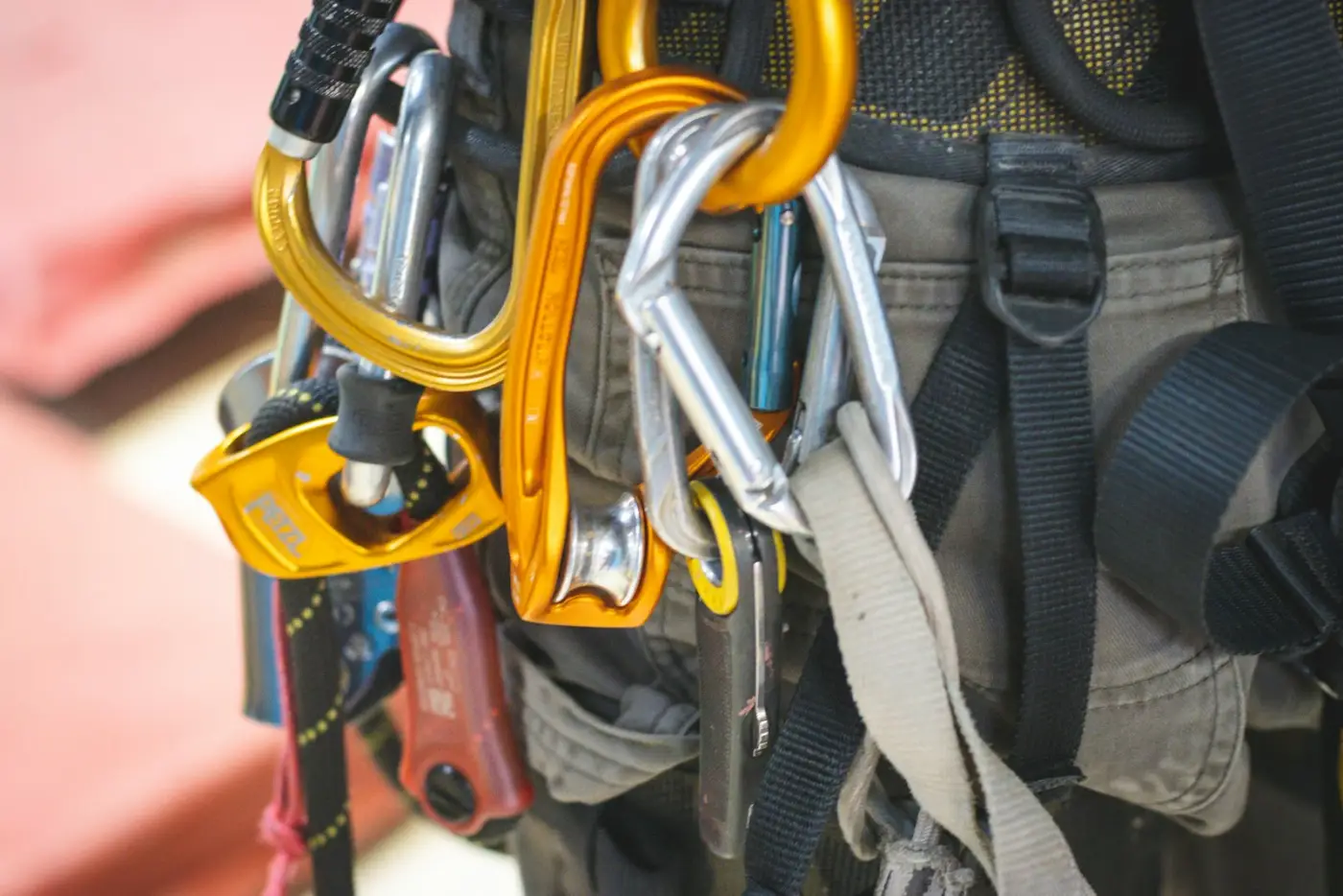
- Connectors (snap hooks, karabiners): gates close and lock on their own, no distortion or corrosion.
- Self-retracting lifelines: line retracts smoothly and locks when jerked, housing undamaged.
If any part fails, take the whole set aside and tell your supervisor. Do not mix components from different manufacturers unless the instructions say they are compatible.
Detailed and periodic inspection: what to add
The detailed and periodic checks repeat everything above in more depth, plus:
- Confirm the harness is within the service life given by the manufacturer. Many manufacturers give a maximum life for textile products, but it varies, so read the instructions for your model.
- Compare the condition against the last record. Rapid deterioration may point to a storage or use problem.
- Check the user instructions are available for that model.
- Record the result, the date, the inspector's name and the next due date. Mark the harness (tag, sticker or register entry) in the way your site requires.
Periodic examination by a competent third party is common on UAE projects and is often asked for at site induction. Keep the inspection certificate with the harness record so you can show it quickly.
When to remove a harness from service
Withdraw the harness immediately, and do not use it again until a competent person has decided, if:
- It has arrested a fall or been shock-loaded, or the fall indicator shows.
- Any webbing cut, burn, chemical damage or broken stitching is found.
- Any metal part is cracked, bent, sharp-edged or badly corroded.
- The label is missing or unreadable.
- It is past its periodic examination date or the manufacturer's service life.
- You simply are not sure. Doubt means out.
Mark withdrawn harnesses clearly (for example with "DO NOT USE" tags) and keep them separate so they cannot end up back in the site store by mistake. Cutting the webbing of a condemned harness stops anyone reusing it.
Care and storage in UAE conditions
Heat, sun and dust shorten harness life. A few habits make a real difference:
- Store harnesses hanging up in a cool, dry, shaded place, away from direct sunlight, fuel, chemicals and welding.
- Do not leave them in vehicle cabs or on open decks in summer.
- Clean with mild soapy water if the manufacturer allows it, rinse and let them dry naturally in the shade. Never dry with direct heat.
- Do not mark webbing with paint or solvent-based pens.
- Issue each harness to one person where possible, so the wearer knows its history.
Fitting check before work at height
Inspection and fit go together. Once a harness passes the pre-use check:
- Leg straps snug, with roughly a flat hand's space between strap and leg.
- Chest strap at mid-chest, not across the throat or stomach.
- Dorsal D-ring between the shoulder blades.
- All loose strap ends tucked into keepers.
On a mobile elevating work platform, clip to the anchor point the manufacturer has marked inside the basket. Our guide on boom lift vs scissor lift explains how harness practice usually differs between those two machines, and the boom lift rental page covers the access machines we supply.
Training and supervision
A checklist works only if people know what a fault looks like. Short toolbox talks with real damaged samples help crews see what "cut", "glazed" or "pulled stitching" actually means. If your team needs it, APEX PRO runs operator training, and a certificate of completion is issued.
Certified harnesses from APEX PRO
APEX PRO sells and rents certified full body harnesses supplied with the manufacturer's conformity certificate and an inspection certificate, so your site records are complete from day one. See the certified safety harness page for sale and rental options. If you are also arranging lifting gear, our certified lifting belts and slings come with certificates too.
Send us the quantity and sizes you need on WhatsApp or through contact us and we will confirm stock and delivery to your site.
Frequently asked questions
How often should a full body harness be inspected?
The wearer should check it before every use. A competent person should carry out a periodic examination at least every 12 months, based on EN 365 guidance, and more often if the manufacturer or your site requires it. Many UAE sites set shorter intervals for harnesses used daily in heat, dust or near welding, so follow your main contractor's HSE plan.
Who is allowed to inspect a safety harness?
Any trained wearer can do the pre-use check. Detailed and periodic inspections should be done by a competent person: someone trained to judge harness condition against the manufacturer's criteria and able to record the result. On many UAE projects the periodic examination is done by a third-party inspection company, and a certificate is kept with the harness record.
Can a harness be used again after a fall?
No. A harness that has arrested a fall or been shock-loaded must be removed from service straight away, even if it looks undamaged. Many harnesses have a fall indicator that shows when this has happened. Follow the manufacturer's instructions, which normally say the harness must be withdrawn and destroyed or returned to the manufacturer for assessment.
How long does a full body harness last?
It depends on the manufacturer, the materials and how the harness is used and stored. Many manufacturers state a maximum service life for textile fall-protection products, but the figure varies by model, so read the user instructions. Heavy use, sun, heat and chemicals can end a harness's life much sooner, which is why regular inspection matters.
What should a harness inspection record include?
Include the serial or batch number, manufacturer and model, date of manufacture, date of inspection, the result (pass or fail, with defects noted), the inspector's name and the next due date. Keep the manufacturer's conformity certificate and any third-party inspection certificate with the record so you can show them at site induction or audit.
Does sunlight damage a safety harness?
Yes. UV light and heat weaken synthetic webbing over time. Signs include fading, a dry or papery feel and stiffness. In the UAE, harnesses left in vehicle cabs, on open decks or in hot containers age faster. Store them hanging in a cool, shaded, dry place and include UV damage in every pre-use check.

APEX PRO hire desk
Written by the team that delivers, certifies and services equipment across the UAE every day. About APEX PRO.