Boom Lift vs Scissor Lift: How to Choose the Right Manlift for Your Site
Scissor lift or boom lift? Compare height, outreach, floor conditions and typical jobs so you hire the right manlift for your UAE site the first time.
Boom lift vs scissor lift: the short answer
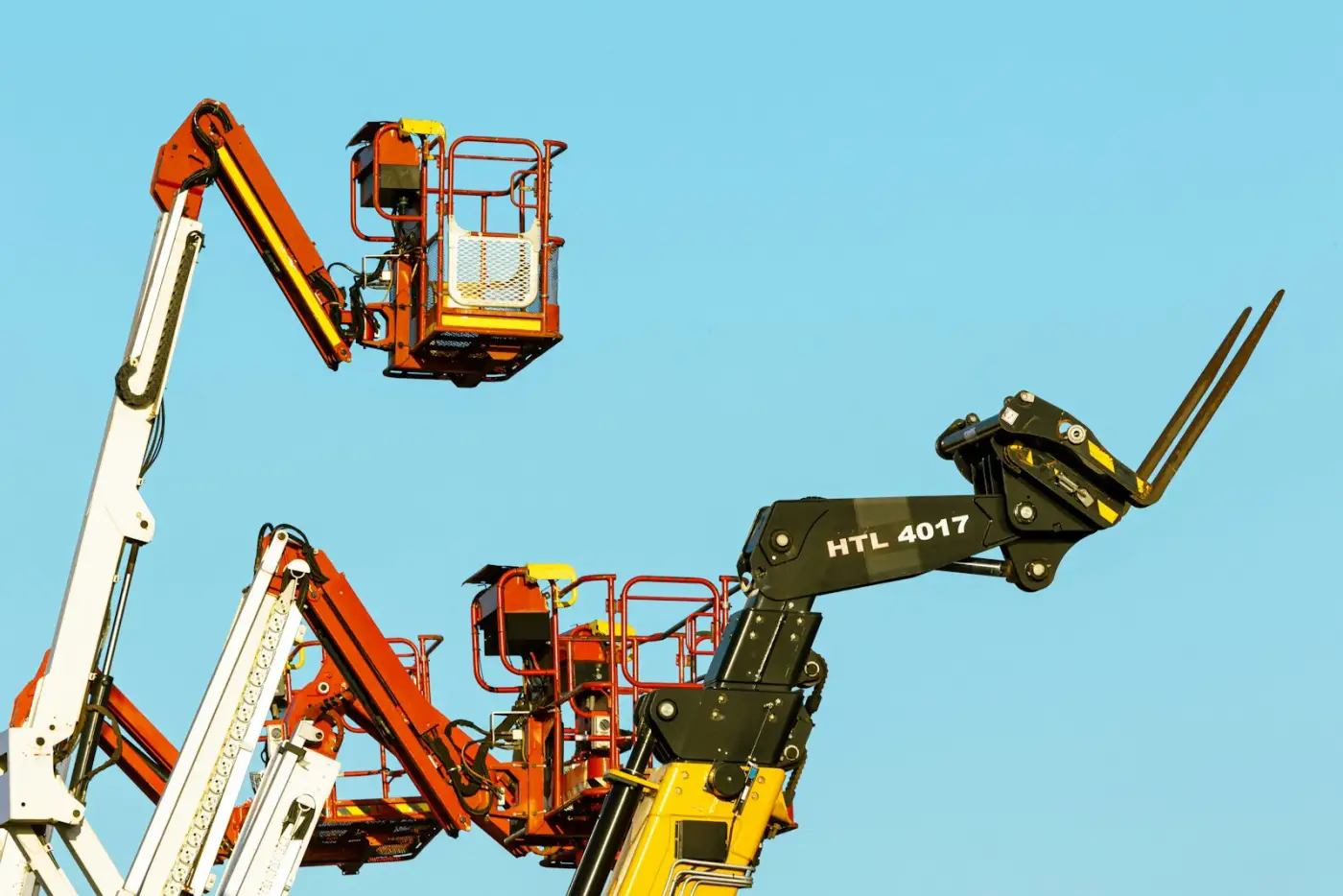
The boom lift vs scissor lift question comes up on almost every UAE fit-out, MEP and facade job. Both are mobile elevating work platforms (MEWPs), and both are called a "manlift" on many Dubai sites, but they solve different problems. A scissor lift goes straight up and gives you a wide, stable deck for two or more people and their materials. A boom lift puts one or two people on a smaller basket at the end of an arm that can reach up, out and over obstacles.
If the work area is directly above a firm, level floor and you need space for tools, pick a scissor lift. If you have to reach over something (a canopy, a parapet, landscaping, a pipe rack) or work on a high facade from the ground, pick a boom lift.
The rest of this guide explains how each machine works, how to compare them on height, outreach, ground conditions and power, and the questions to settle before you put one on hire.
How each machine works
Scissor lifts
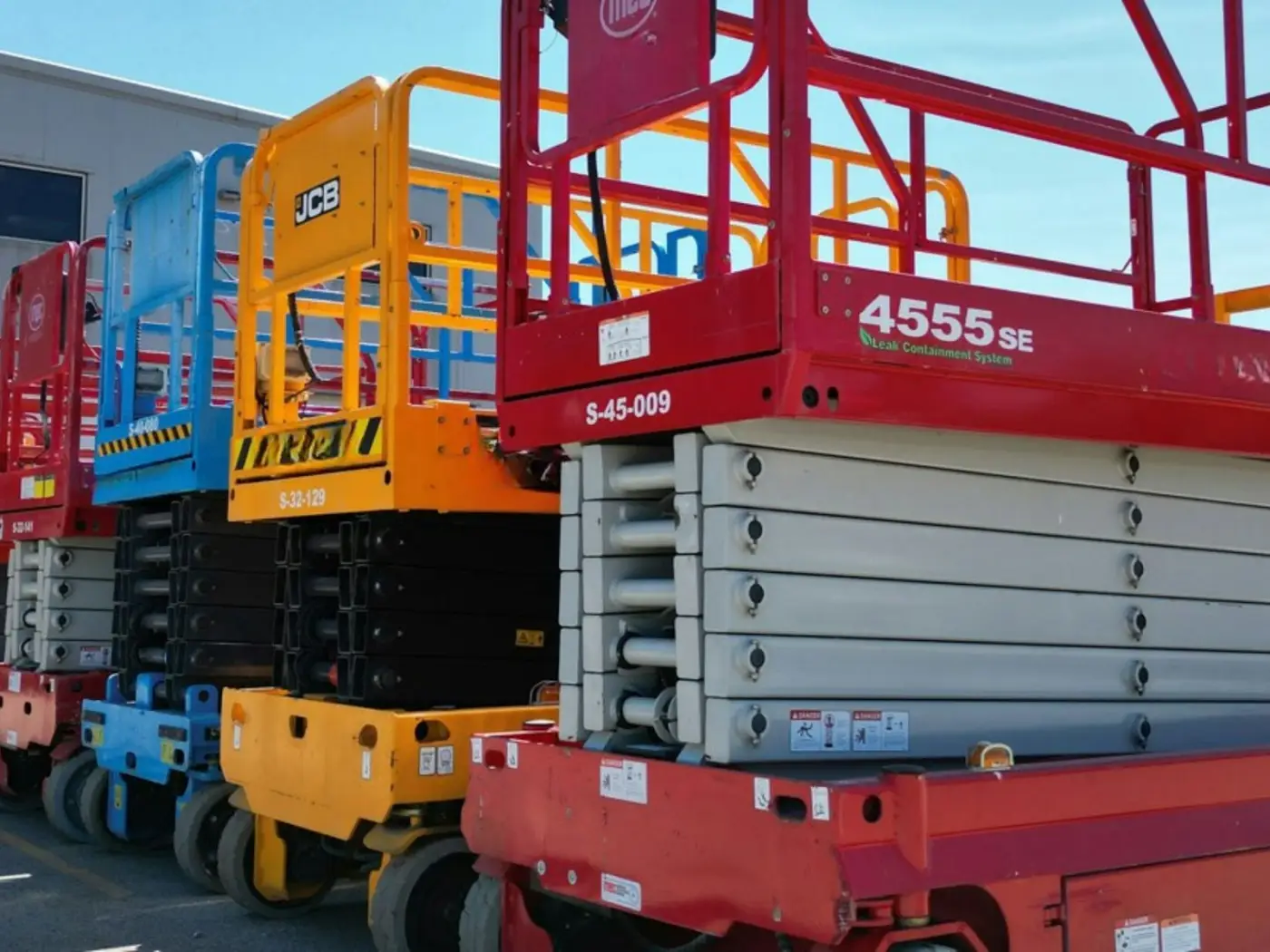
A scissor lift raises its platform on a stack of criss-crossed steel supports (the "scissor pack"). As the hydraulic cylinder pushes the pack open, the deck rises vertically. It cannot move sideways, so the platform always stays over the chassis. Most scissor lifts have a roll-out deck extension of roughly 0.9 to 1.5 m that gives a little extra reach at one end.
Under the ANSI A92.20 classification a typical scissor lift is a Group A machine, meaning the platform stays within the tipping lines of the base, and usually Type 3, because it can be driven while raised using controls on the platform.
Boom lifts
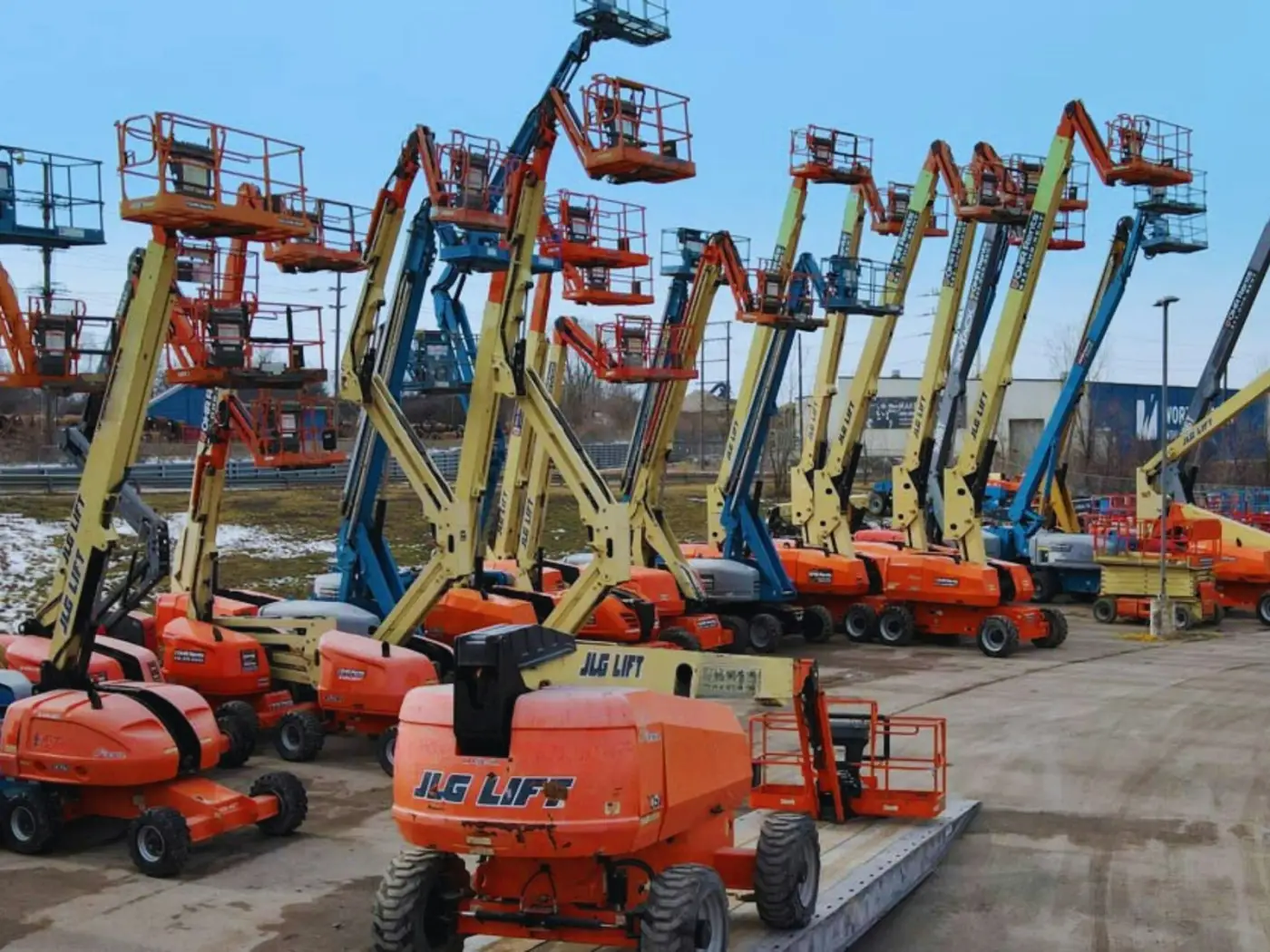
A boom lift mounts its basket on a hydraulic arm fixed to a turntable that rotates on the chassis. There are two main kinds:
- Telescopic (straight) boom lifts extend in a straight line. They give the most height and horizontal outreach for the money and suit open sites, steel erection and facade access.
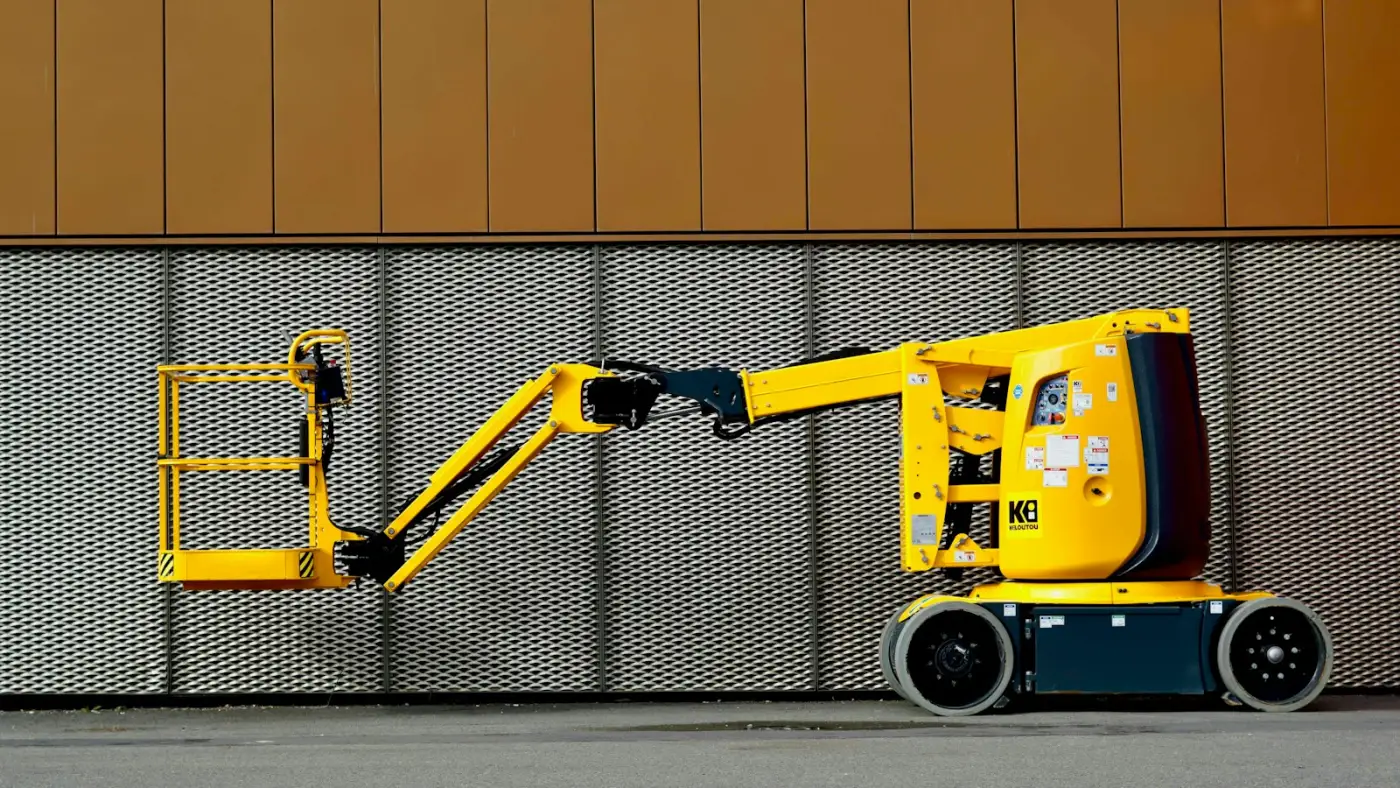
- Articulating (knuckle) boom lifts have one or more hinged sections, so the basket can go up, then out, then over and down. They are the right tool when you need to reach past an obstacle.
Because the basket can be placed beyond the base, boom lifts are Group B MEWPs. Self-propelled boom lifts that drive with controls in the basket are usually classed as Type 3 (3B). The UK and Gulf habit of calling a boom lift a cherry picker is explained in our guide on what a cherry picker is.
Side-by-side comparison
The figures below are typical class ranges, not the spec of any one machine. Always check the manufacturer's data plate and load chart for the unit you hire.
| Factor | Scissor lift | Boom lift |
|---|---|---|
| Movement | Vertical only | Up, out and over; turntable rotates |
| Typical working height | approx. 6 to 18 m (larger rough-terrain units go higher) | approx. 12 to 40+ m |
| Horizontal outreach | Only the deck extension | Several metres up to 20 m+ on large telescopic booms |
| Platform size | Large deck, often 2 to 4+ people | Basket, usually 1 to 2 people |
| Platform capacity | Commonly 230 to 1,000+ kg | Commonly 230 to 450 kg |
| Footprint | Narrow electric models fit standard doorways | Larger base and tail swing |
| Best for | Ceilings, MEP, overhead installation, warehouses | Facades, steelwork, signage, trees, reaching over obstacles |
| ANSI A92.20 group | Group A | Group B |
Choosing by job type
Indoor fit-out, MEP and ceiling work
For ceiling grids, ductwork, cable tray, sprinkler pipework and lighting inside malls, warehouses and towers, the scissor lift usually wins. Electric slab scissors run quietly, produce no exhaust and have non-marking tyres, and the narrow models pass through standard doors and fit in goods lifts. The big deck lets two installers work side by side with their materials, which saves trips up and down. See typical sizes on our scissor lift rental page.
Facades, glazing and external MEP
When the work face is high and away from where the machine can stand, a boom lift is the practical choice. A telescopic boom can stand back from a podium edge or a landscaped strip and still reach the facade. An articulating boom can climb over a canopy or a boundary wall and then drop into position. Facade cleaning, sealant repairs, signage and external lighting are typical boom jobs.
Steel erection and warehouses
Steel connections at height often need the operator to get close to the joint from the side. Booms do this well on open ground. Inside a finished warehouse with a level slab and racking aisles, a narrow scissor lift is usually faster and safer.
Tight or delicate floors
Where the floor cannot take a heavy machine (atriums, marble, raised floors, mezzanines), neither a standard scissor nor a standard boom may be suitable. A tracked spider lift spreads its weight on outriggers and can pass through a single doorway, so it is often the answer for hotel lobbies, villas and heritage interiors.
Ground conditions, power and the Gulf climate
Ground. Slab scissors are built for smooth, level, hard floors. On sand, gravel or uneven site roads you need a rough-terrain scissor or a diesel boom with four-wheel drive and oscillating axles. Always check ground bearing capacity, especially near trenches, backfilled areas, manholes and basement slabs.
Power. Electric and hybrid units are the default indoors and in occupied buildings. Diesel booms and rough-terrain scissors are the norm outdoors on construction sites. In summer heat, plan battery charging and keep machines shaded when parked; hydraulic oil and batteries both suffer in high temperatures.
Wind. Every MEWP has a maximum rated wind speed on its data plate; some machines are rated for indoor use only (0 m/s). Booms with large outreach are more exposed. On coastal and high-rise sites in Dubai and Abu Dhabi, check the forecast and the site's wind limits before each shift.
Safety points that apply to both
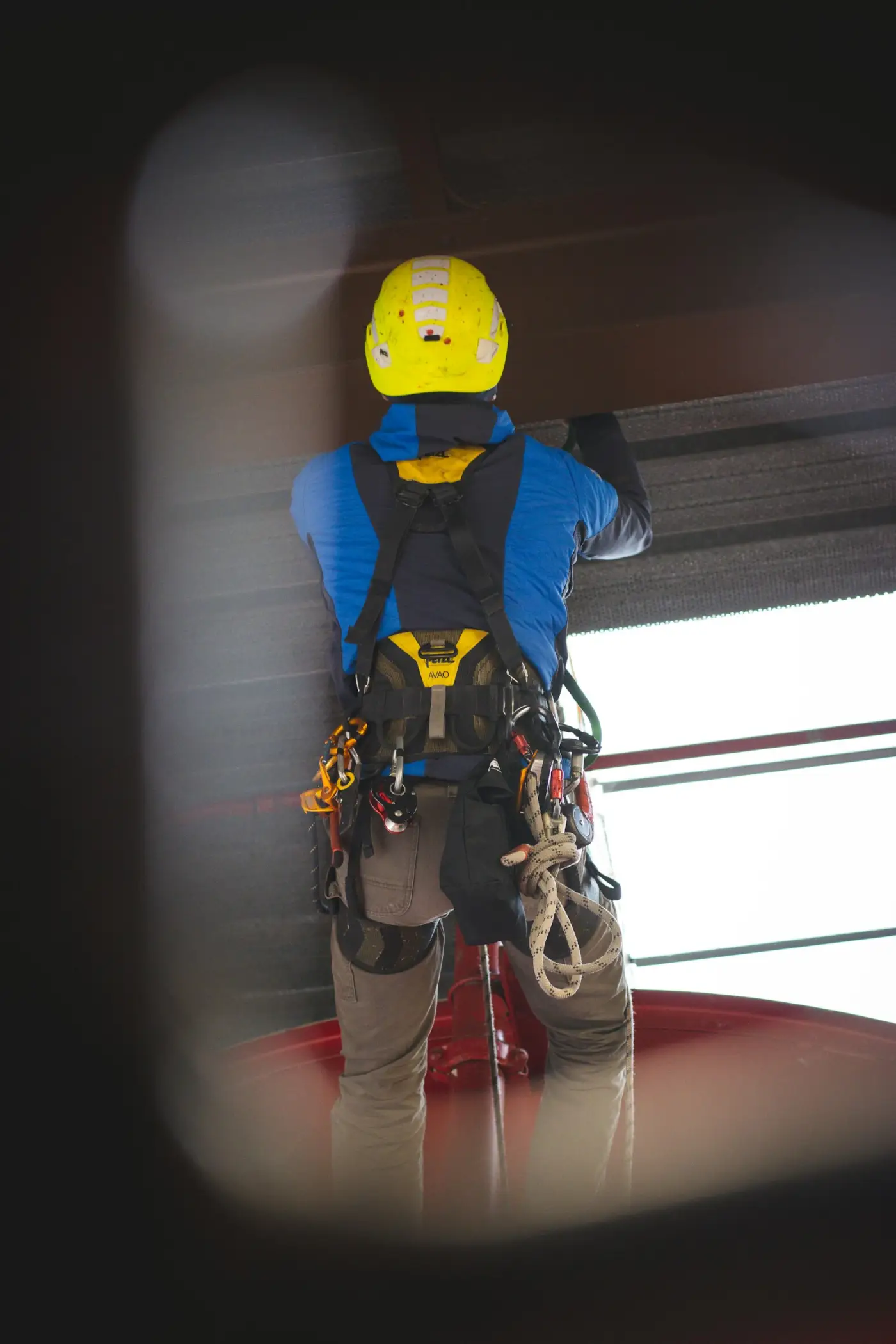
- Harness and lanyard. Fall-restraint use in boom baskets is standard practice; scissor lift rules vary by site. Follow your main contractor's HSE plan and the manufacturer's manual. We supply certified full-body harnesses for sale and rent.
- Trained operators. Anyone using the platform should be trained on that class of machine and familiarised with the specific model. Read more about hiring a certified operator.
- Paperwork. Ask for a current third-party inspection (TPI) certificate for the machine, and agree who provides the risk assessment and method statement.
- Daily checks. Run a pre-use inspection each shift: controls, emergency lowering, tyres, guardrails, leaks and alarms.
- Rescue plan. Have a written plan for bringing someone down if the machine fails at height.
Cost and hire considerations
Day rates for both machine types depend on height, power type and hire length, so compare like for like. A few general points help:
- A scissor lift is usually the cheaper option at the same working height, because the mechanism is simpler.
- Hiring a bigger boom "just in case" costs more and needs more space. Measure the real working height and outreach first.
- Weekly and monthly hire usually lowers the effective day rate on long fit-out programmes.
- Ask for delivery, fuel and operator to be shown separately on the quote so you can compare suppliers properly.
A quick decision checklist
Answer these before you request a quote:
- What is the highest point the person needs to work at (not the ceiling height)?
- Can the machine stand directly below the work, or does it need to reach out or over something?
- Is the floor indoor slab, finished flooring, or rough site ground? What load can it take?
- How many people and how much material need to be on the platform at once?
- What access is there: door widths, ramps, goods lift size and weight limit?
- Indoor or outdoor, and does the site restrict diesel engines?
- Do you need dry hire or an operator supplied?
If the answers point to straight-up work with materials on a good floor, choose a scissor lift. If they point to reach, obstacles or high facades, choose a boom lift.
Need one on site?
APEX PRO supplies electric and diesel access machines across all seven emirates from our Saih Shuaib 2 office, on daily, weekly, monthly or project hire, dry or with an operator. Every machine travels with its current TPI certificate. Browse boom lift and manlift rental or scissor lift rental, or send us your working height, floor type and location through our contact page for a written quote.
Frequently asked questions
What is the main difference between a boom lift and a scissor lift?
A scissor lift only moves straight up and keeps its platform above the base, giving a large, stable deck for several people and materials. A boom lift carries a smaller basket on an arm that rotates and extends, so it can reach up, out and over obstacles. Choose a scissor for vertical work above a level floor and a boom for reach and access around obstacles.
Is a scissor lift safer than a boom lift?
Neither machine is safer by default. Both are safe when used by trained operators on suitable ground, within their rated load and wind limits, with daily pre-use checks and a rescue plan. A scissor lift has a lower risk of tipping from outreach because the platform stays over the base, while a boom lift's outreach demands closer attention to ground conditions and the load chart.
Do you need a harness on a scissor lift?
It depends on the site rules and the manufacturer's instructions. Fall-restraint harnesses are standard practice in boom lift baskets. On scissor lifts the guardrails are the primary protection, but many UAE main contractors still require a harness clipped to a designated anchor point. Always follow your project's HSE plan and the machine manual, and use a certified, inspected harness.
Can a scissor lift be used outdoors?
Yes, if it is rated for outdoor use. Rough-terrain scissor lifts with diesel or hybrid power, four-wheel drive and larger tyres are built for site ground. Many electric slab scissors are rated for indoor use only, with a zero wind rating. Check the data plate for the maximum wind speed and confirm the ground is firm and level before working outdoors.
What height of boom lift do I need?
Measure the highest point the operator must reach, then allow about two metres because working height is normally quoted as platform height plus two metres. Next, measure the horizontal distance from where the machine can stand to the work face, and any obstacle it must reach over. Use both figures with the manufacturer's reach chart to pick the smallest boom that does the job.
Is a manlift the same as a boom lift?
On many UAE sites, yes. Manlift is a common local term for a boom lift, and some people also use it for any aerial work platform, including scissor lifts. When requesting a quote, describe the job in terms of working height, outreach and floor type so the supplier sends the right machine, whatever name is used.
APEX PRO hire desk
Written by the team that delivers, certifies and services equipment across the UAE every day. About APEX PRO.