What Is a Cherry Picker? Types, Uses and Safety Explained
A cherry picker is a boom-type aerial work platform that lifts a person in a basket. Here are the main types, typical sizes, uses and safety basics.
What is a cherry picker?
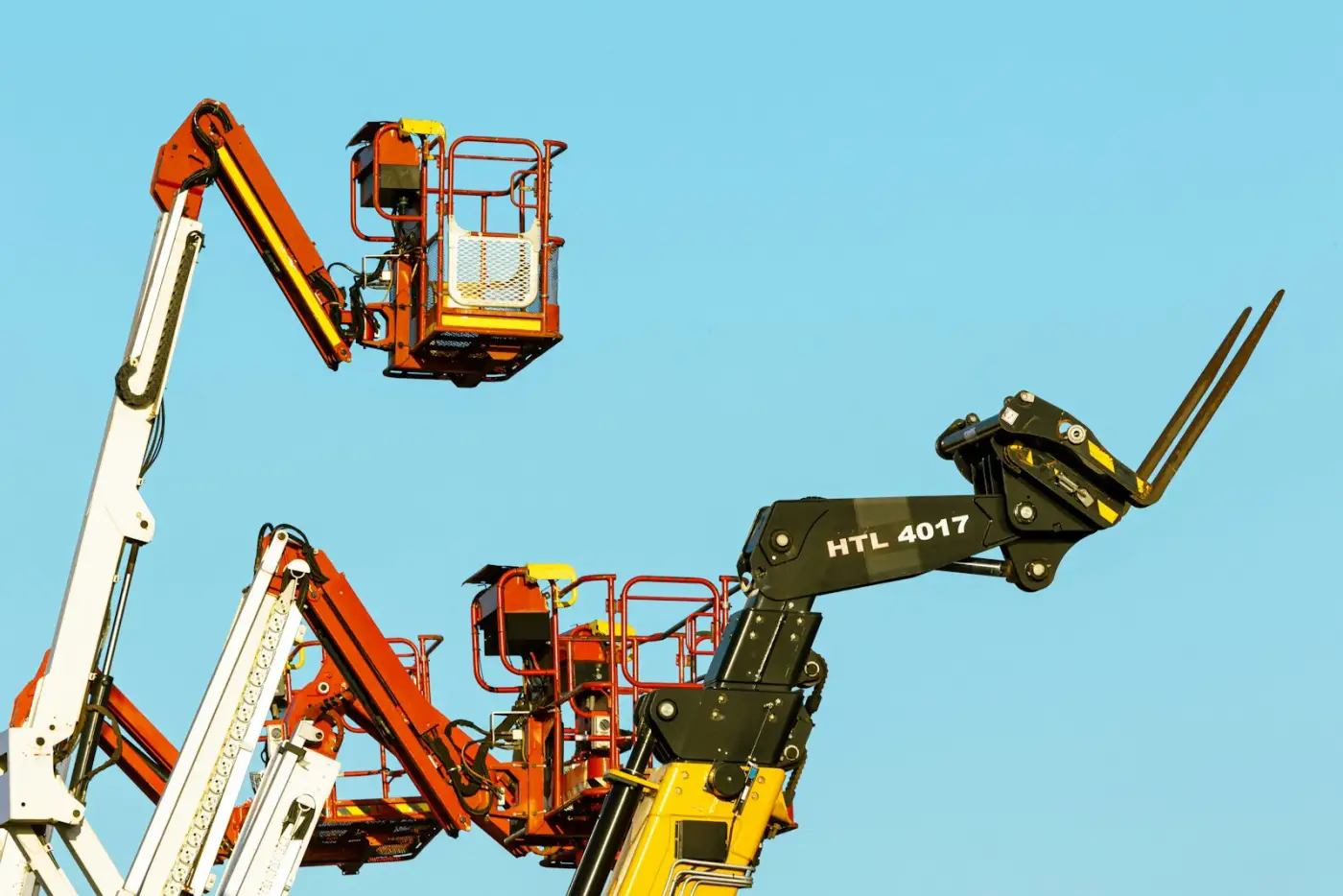
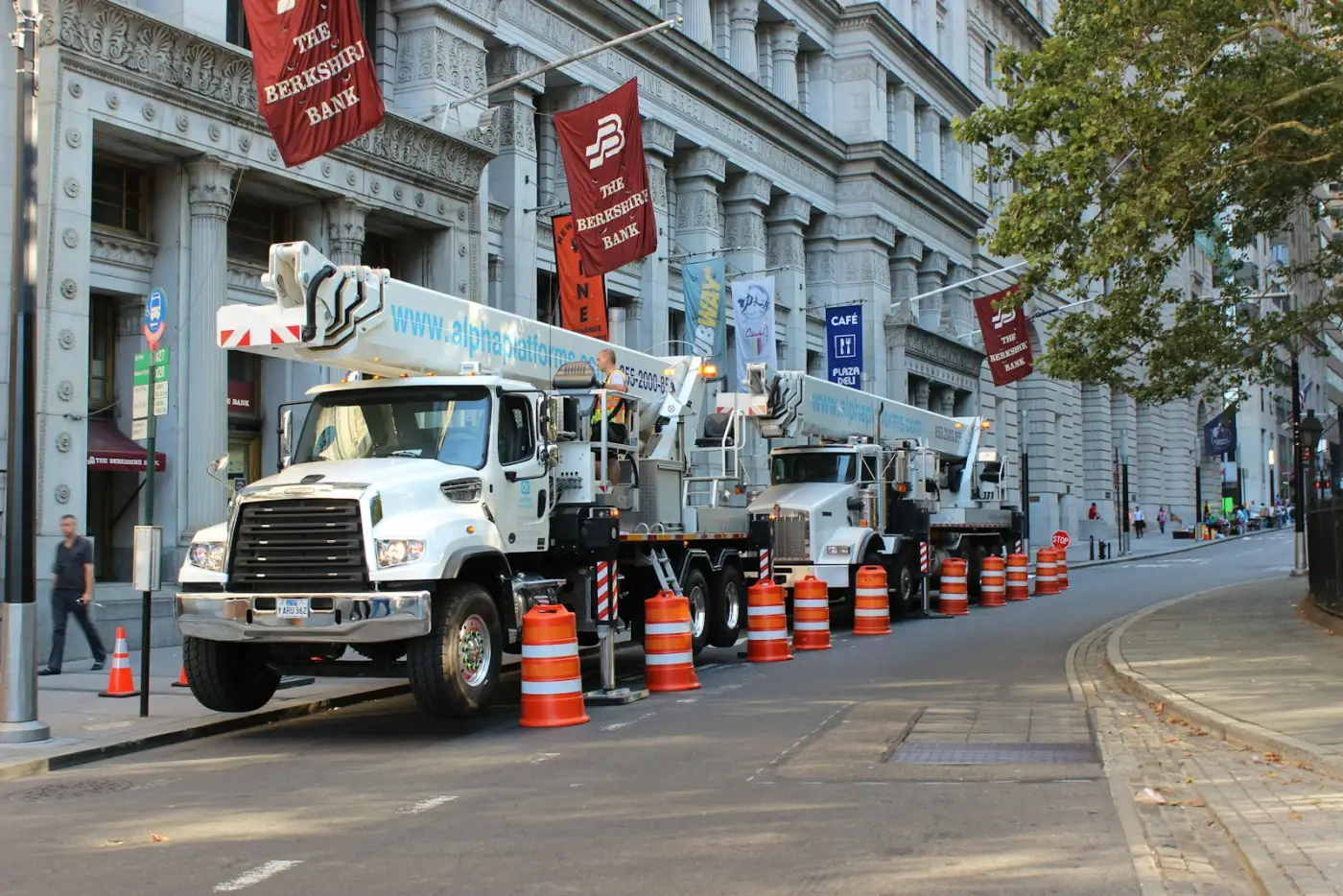
So, what is a cherry picker? It is the everyday name for a powered aerial work platform that lifts a person in a basket (also called a bucket or cage) on the end of a hydraulic arm. The arm can rise, extend and rotate, so the person in the basket can be placed precisely at the work point, often above and beyond obstacles that a ladder or scaffold could not clear.
In technical terms a cherry picker is a mobile elevating work platform (MEWP) with a boom. Under the ANSI A92.20 classification, machines whose platform can move beyond the tipping lines of the base, which includes boom-type cherry pickers, are Group B MEWPs. On UAE sites you will also hear cherry pickers called manlifts, boom lifts, bucket trucks or simply "the basket".
This guide explains where the name comes from, the main types, what cherry pickers are used for, how they differ from other access equipment, and the safety basics every site manager should know.
Where the name comes from
The term comes from fruit growing. Early boom platforms were used in orchards so that workers could reach fruit at the top of trees without climbing ladders, and the jointed arm let them work around branches without damaging the tree. The design was later taken up by electricity and telephone companies for overhead line work, and the orchard nickname stuck. Today "cherry picker" is an informal, generic term, especially common in the UK, the Gulf and other Commonwealth countries.
The main types of cherry picker
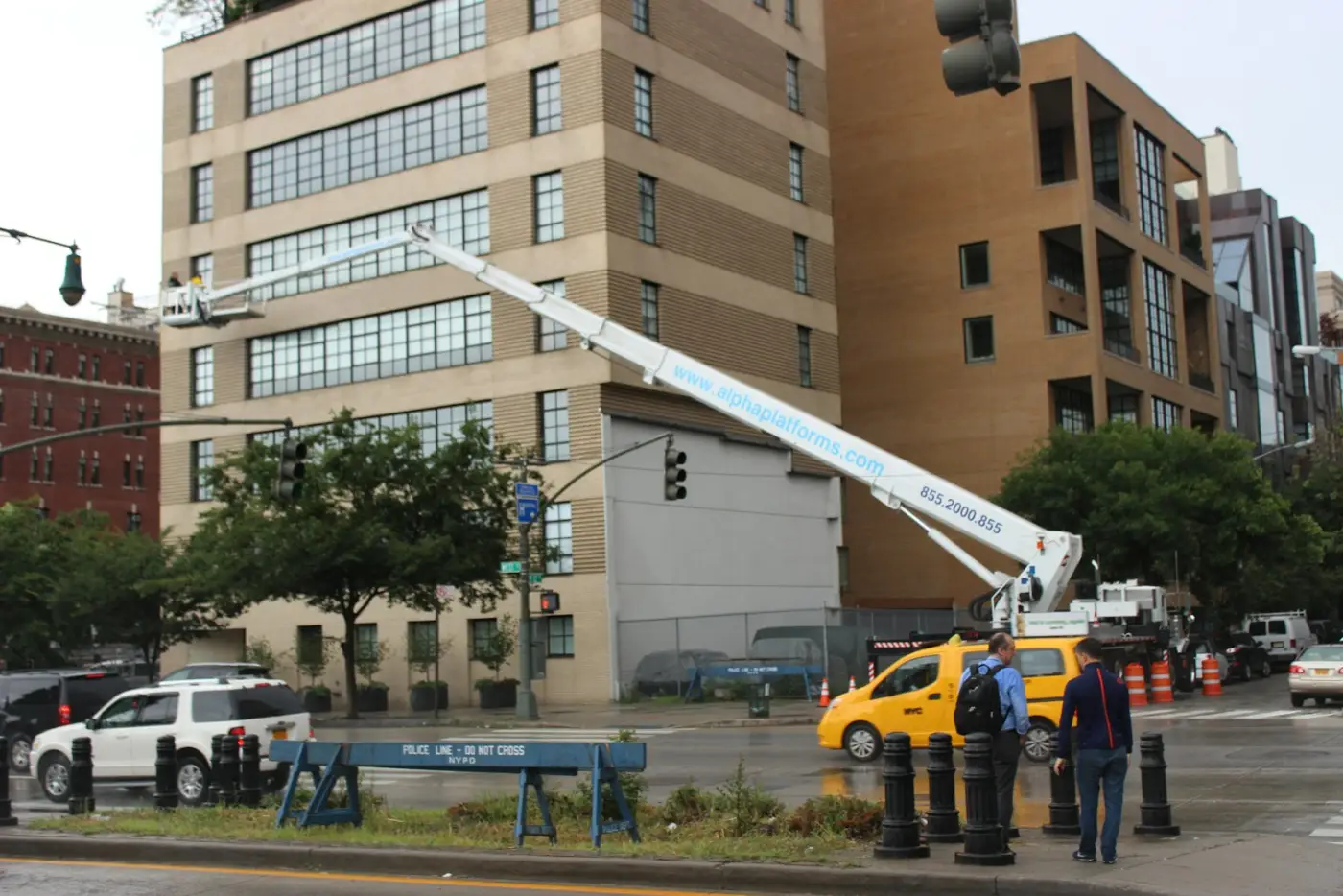
Truck-mounted cherry pickers
The boom and basket are mounted on the back of a road-going truck or van. Because the platform drives itself to site at road speed, it is popular for short, frequent jobs: street lighting, signage, CCTV, tree trimming and utility work. Outriggers are deployed at each stop to stabilise the vehicle before the boom is raised. Some smaller vehicle-mounted units can be driven on a standard car licence; larger ones need the right licence category for the vehicle's weight.
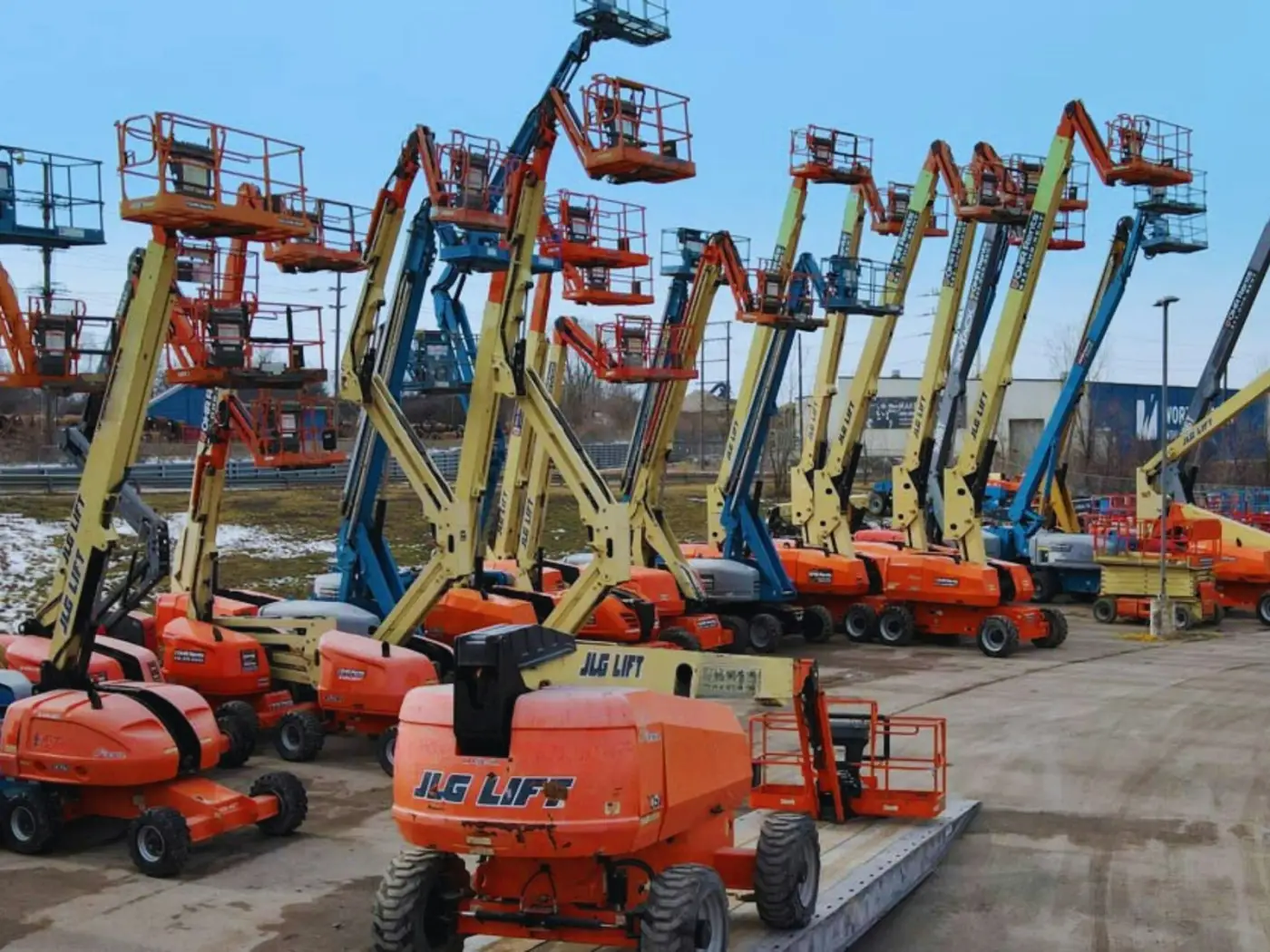
Self-propelled boom lifts
These are the machines most construction sites mean by "manlift". The operator drives the whole unit from the basket at low speed. They come in two styles:
- Telescopic booms extend in a straight line for maximum height and outreach.
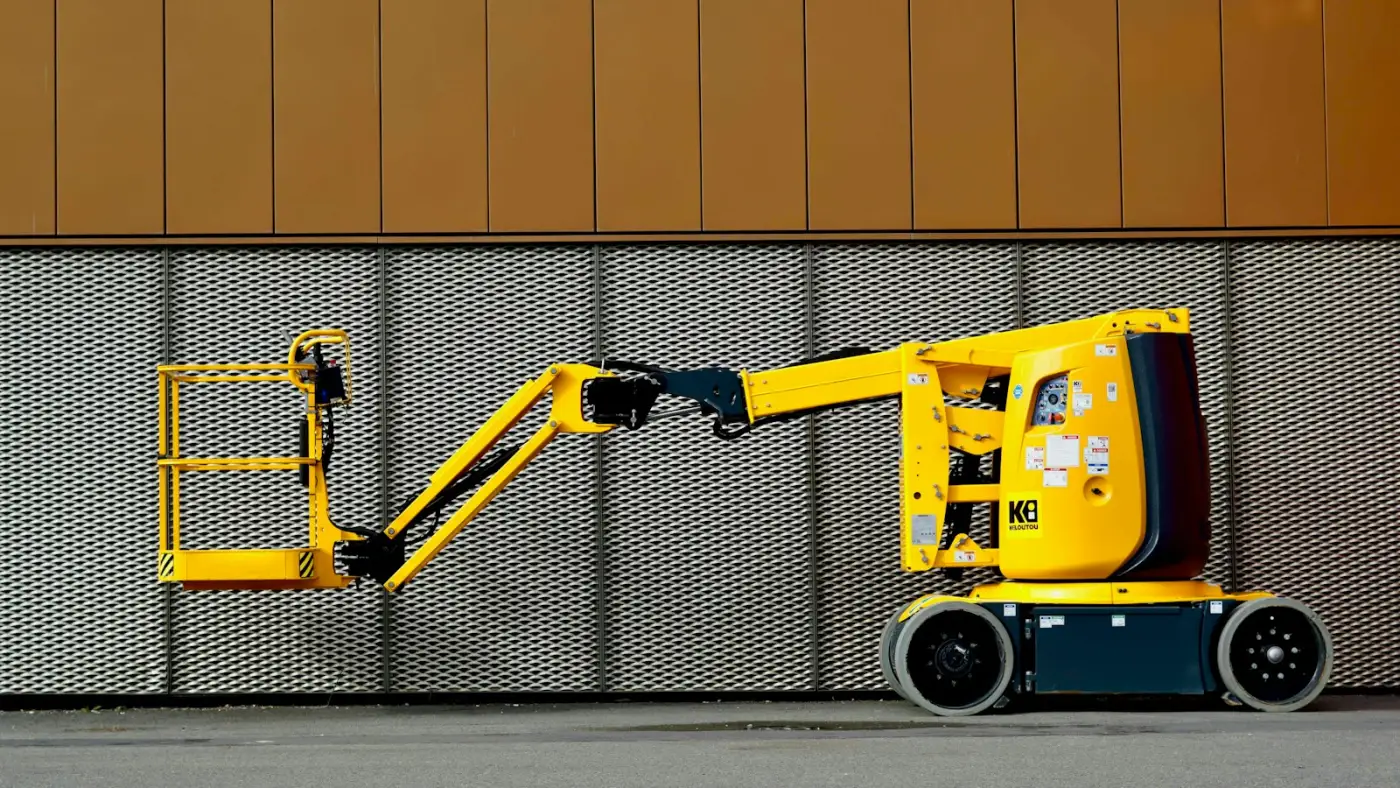
- Articulating booms have hinged "knuckle" sections that go up and over obstacles.
Self-propelled booms suit construction, facade, steel and MEP work where the machine stays on one site for days or weeks. For a full comparison with scissor lifts, see our guide to boom lift vs scissor lift.
Trailer-mounted (towable) cherry pickers
A lightweight boom on a towable trailer. They are easy to move between nearby sites with a pickup, set up on outriggers, and suit maintenance and light facility work.
Tracked spider lifts
A compact boom on rubber tracks with four outriggers that fold out like legs. Spider lifts are light and narrow enough to pass through doorways and work on delicate floors, slopes and landscaped areas. They are often used in hotel atriums, malls, villas and gardens. See our spider lift rental page for typical sizes.
Typical cherry picker sizes
The ranges below are typical for each class, not the spec of a particular model.
| Type | Typical working height | Typical basket capacity | Where it suits |
|---|---|---|---|
| Truck/van-mounted | approx. 12 to 30+ m | approx. 200 to 300 kg | Roads, utilities, signage, lighting |
| Self-propelled articulating | approx. 12 to 30 m | approx. 230 to 300 kg | Construction, reaching over obstacles |
| Self-propelled telescopic | approx. 18 to 40+ m | approx. 230 to 450 kg | Facades, steelwork, open sites |
| Trailer-mounted | approx. 10 to 20 m | approx. 200 kg | Maintenance, light facility work |
| Tracked spider lift | approx. 12 to 30+ m | approx. 200 to 250 kg | Indoor, delicate floors, slopes |
Working height is normally quoted as the platform floor height plus about 2 m, the reach of a person standing in the basket.
What cherry pickers are used for
- Construction and fit-out: steel connections, facade and glazing installation, cladding, sealant and external MEP.
- Facility management: high-level lighting, CCTV, signage, glass cleaning and atrium maintenance in malls, airports and hotels.
- Utilities and roads: street lights, traffic signals, overhead cables and telecom equipment.
- Events and media: rigging lights and banners, filming and photography from height.
- Landscaping: palm and tree trimming, and work over planted areas that cannot be driven on.
- Industrial plants: inspection and repair on tanks, pipe racks and building envelopes.
Cherry picker vs other access and lifting equipment
Cherry picker vs scissor lift
A scissor lift goes straight up only, with a large deck for more people and materials. A cherry picker trades deck size for reach and flexibility. If you need to get over something or out from the base, it is a cherry picker job.
Cherry picker vs crane with a man basket
A cherry picker is purpose-built to lift people. A crane is designed to lift loads, and using a crane-suspended personnel basket is generally treated as a last resort under strict extra controls. Check your site's HSE plan and lifting procedures before considering it.
Cherry picker vs boom loader with a work platform
A boom loader (telehandler) is a materials handler. Some models accept a manufacturer-approved work platform attachment, but this is a different setup with its own controls and load chart. For handling pallets and materials, see boom loader vs forklift.
Safety basics
Cherry pickers are among the safest ways to work at height when the basics are followed:
- Trained operator. The person in the basket should be trained on that category of MEWP and familiarised with the specific model. APEX PRO offers operator training, and certified operators can be supplied with the machine.
- Harness and short lanyard. Fall restraint clipped to the basket's designated anchor point is standard practice in boom-type platforms. Use a certified full-body harness that has been inspected, and check the lanyard length keeps the wearer inside the basket rather than arresting a fall outside it.
- Ground and outriggers. Check ground bearing capacity, avoid trenches and soft fill, and use spreader pads under outriggers where required.
- Load and wind limits. Never exceed the basket's rated load. Stop work when wind exceeds the limit on the data plate.
- Overhead hazards. Keep well clear of power lines and watch for crush points against beams and soffits.
- Pre-use inspection. Check controls, emergency lowering, guardrails, hydraulics and alarms every shift.
- Rescue plan. Know how a stranded operator will be brought down, including use of ground controls.
- Paperwork. Ask for the current third-party inspection (TPI) certificate for the machine.
How to choose the right cherry picker
Before you call a supplier, note down:
- the highest point you must work at, and the horizontal distance from where the machine can stand;
- any obstacles to reach over (walls, canopies, trees, parked cars);
- the ground: road, site sand, slab, finished floor or landscaping;
- access routes, door widths and gate sizes;
- how long you need it, and whether you need an operator.
Those answers decide the type (truck-mounted, self-propelled, towable or tracked) and size far more reliably than the name on the quote. In the UAE, also think about timing: in the summer months many sites shift work to early mornings, so confirm delivery windows and whether the machine can be left secured on site overnight.
Need one on site?
APEX PRO supplies cherry pickers and other access platforms across all seven emirates from our office in Saih Shuaib 2, Dubai, on daily, weekly, monthly or project terms, dry hire or with an operator. Each machine travels with its current TPI certificate. See our cherry picker rental and boom lift rental pages, or send your job details through our contact page for a written quote.
Frequently asked questions
Why is it called a cherry picker?
The name comes from orchards. Early boom-mounted platforms were used to lift fruit pickers to the tops of trees without ladders, and the jointed arm let them work around branches. Utility companies later adopted the same design for overhead line work, and the orchard nickname stayed with the machine. It is now an informal term for most boom-type aerial work platforms.
Is a cherry picker the same as a boom lift?
Broadly, yes. A cherry picker is the common name for a boom-type aerial work platform, and a self-propelled boom lift is one kind of cherry picker. The term also covers truck-mounted, trailer-mounted and tracked spider versions. On UAE sites the words cherry picker, boom lift and manlift are often used interchangeably, so describe the job when requesting a machine.
How high can a cherry picker reach?
It depends on the type. Trailer-mounted units typically reach around 10 to 20 metres working height, articulating booms around 12 to 30 metres, and large telescopic booms 40 metres or more. Truck-mounted platforms cover a wide range. Always check the specific machine's reach chart, because outreach reduces as height increases and the basket load also affects reach.
How many people can go in a cherry picker basket?
Most cherry picker baskets are designed for one or two people, with rated loads typically between about 200 and 450 kg including people, tools and materials. The exact number of persons and the maximum load are shown on the machine's data plate and in the manual. Never exceed either limit, and remember that some machines reduce rated load at full outreach.
Do you need training to operate a cherry picker?
Yes. Operators should be trained on the relevant category of mobile elevating work platform and familiarised with the specific model before use. Most UAE main contractors also ask to see a valid operator card or certificate. Check your project's HSE requirements, and if you are unsure, hire the machine with a certified operator supplied.
What is the difference between a cherry picker and a scissor lift?
A cherry picker uses a boom to lift a basket up, out and over obstacles, usually carrying one or two people. A scissor lift raises a larger platform vertically only, giving more room for people and materials but no outreach. Choose a scissor lift for work directly above a level floor, and a cherry picker when you need reach.

APEX PRO hire desk
Written by the team that delivers, certifies and services equipment across the UAE every day. About APEX PRO.