Spider Crane vs Mobile Crane: Capacity, Access and Which to Choose
Light loads in tight spaces or heavy lifts at long radius? Compare spider cranes and mobile cranes on capacity, access, ground loads and typical jobs.
Spider crane vs mobile crane: the short answer
The spider crane vs mobile crane decision usually comes down to three things: how heavy the load is, how far it has to travel from the crane, and how the crane gets into position. A spider crane (also called a mini crawler crane) is a compact, tracked crane that can pass through doorways, ride in goods lifts and set up on outriggers in spaces no truck could reach. A mobile crane is a road-going machine that brings far more capacity and reach but needs a clear road, a large set-up area and firm ground.
As a rule of thumb, if the load is up to a few tonnes and the problem is access, look at a spider crane. If the load is heavy, the radius is long or the lift is high over a building, a mobile crane is normally the right tool.
This guide compares the two on capacity, footprint, ground pressure, set-up and typical UAE jobs, so you can brief your lifting supervisor or supplier with the right questions.
What is a spider crane?
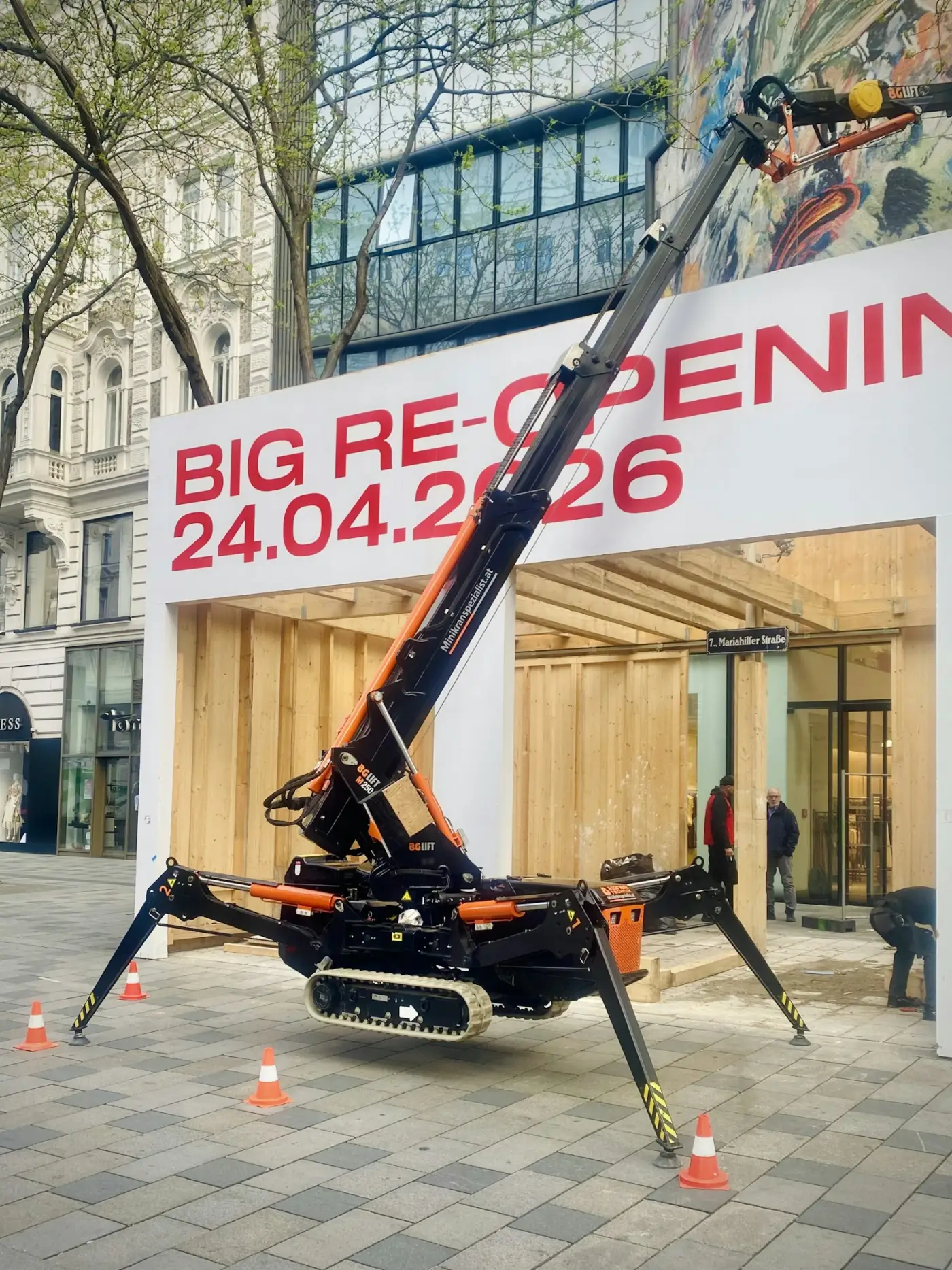
A spider crane is a small crawler crane with a telescopic boom and four fold-out outriggers that look like a spider's legs. The tracks let it climb ramps and travel across a site at walking pace; the outriggers spread its weight and level it for lifting.
Typical characteristics of the class:
- Capacity: from under 1 tonne on the smallest units to around 8 to 10 tonnes on the largest common models.
- Width: the narrowest machines are around 0.6 m wide when stowed, which lets them track through a standard single doorway. Mid-size models are wider, so always check the exact dimensions.
- Power: diesel, with many models also offering electric or battery operation for indoor and occupied-building work.
- Controls: usually radio remote control, so the operator can stand where they see the load best.
- Attachments: vacuum glass lifters, fly jibs, searcher hooks and man-basket options on some models (subject to the manufacturer's approval and your site rules).
What is a mobile crane?
A mobile crane is a crane on a wheeled carrier that can drive between sites. The main types you will see in the UAE are:
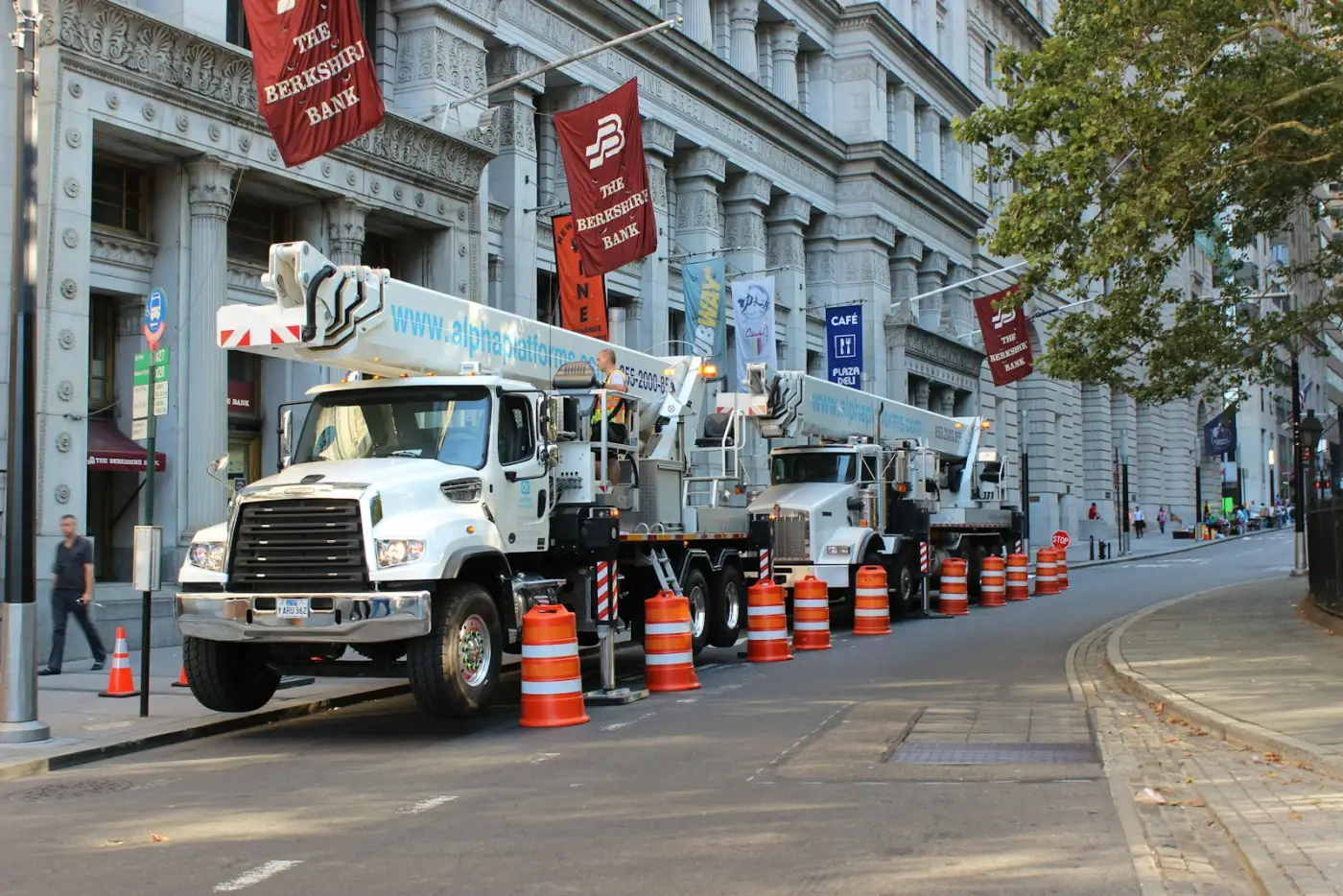
- Truck-mounted cranes: a telescopic boom on a commercial truck chassis. Quick to move on roads and common for general site lifts.
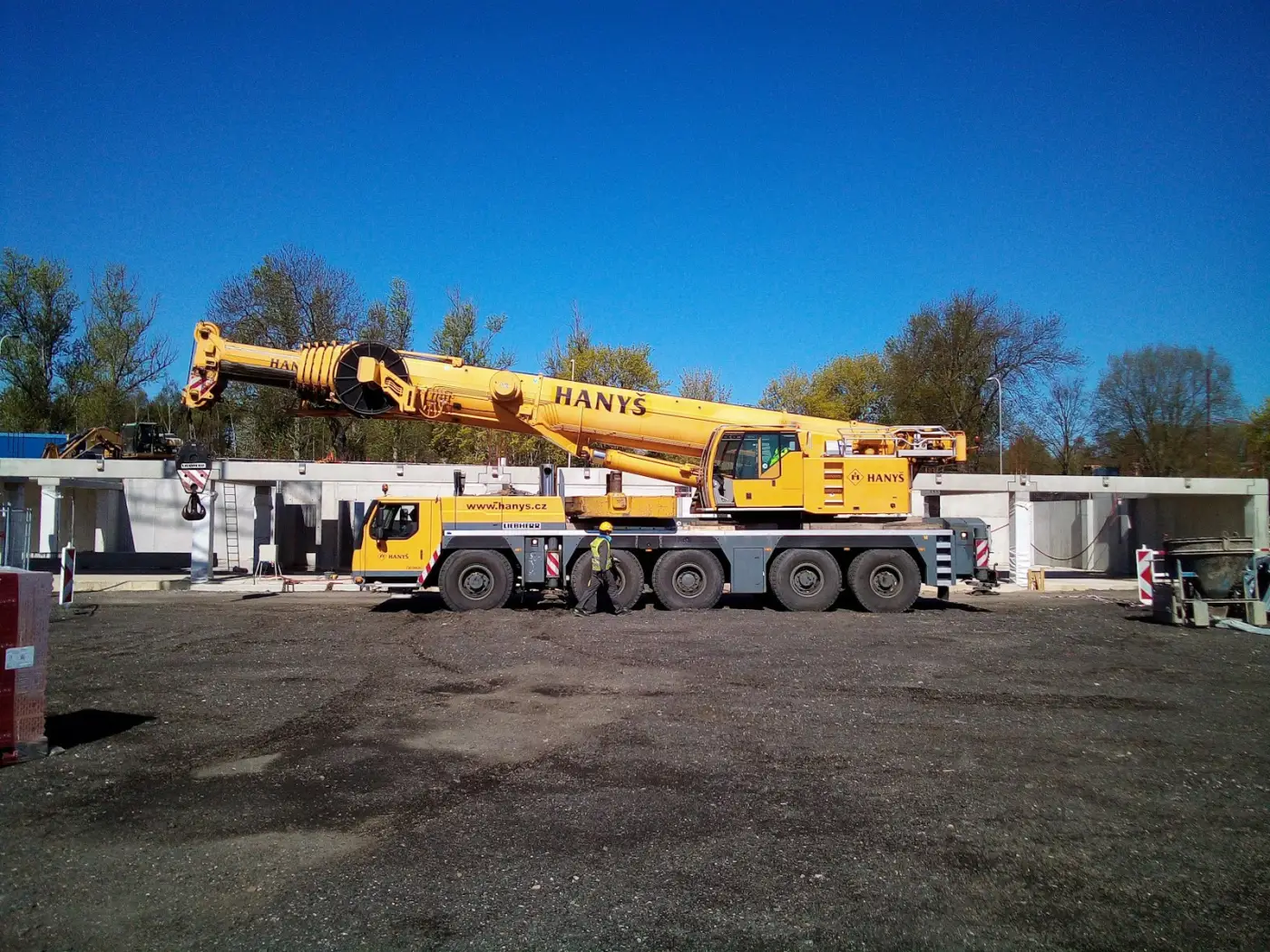
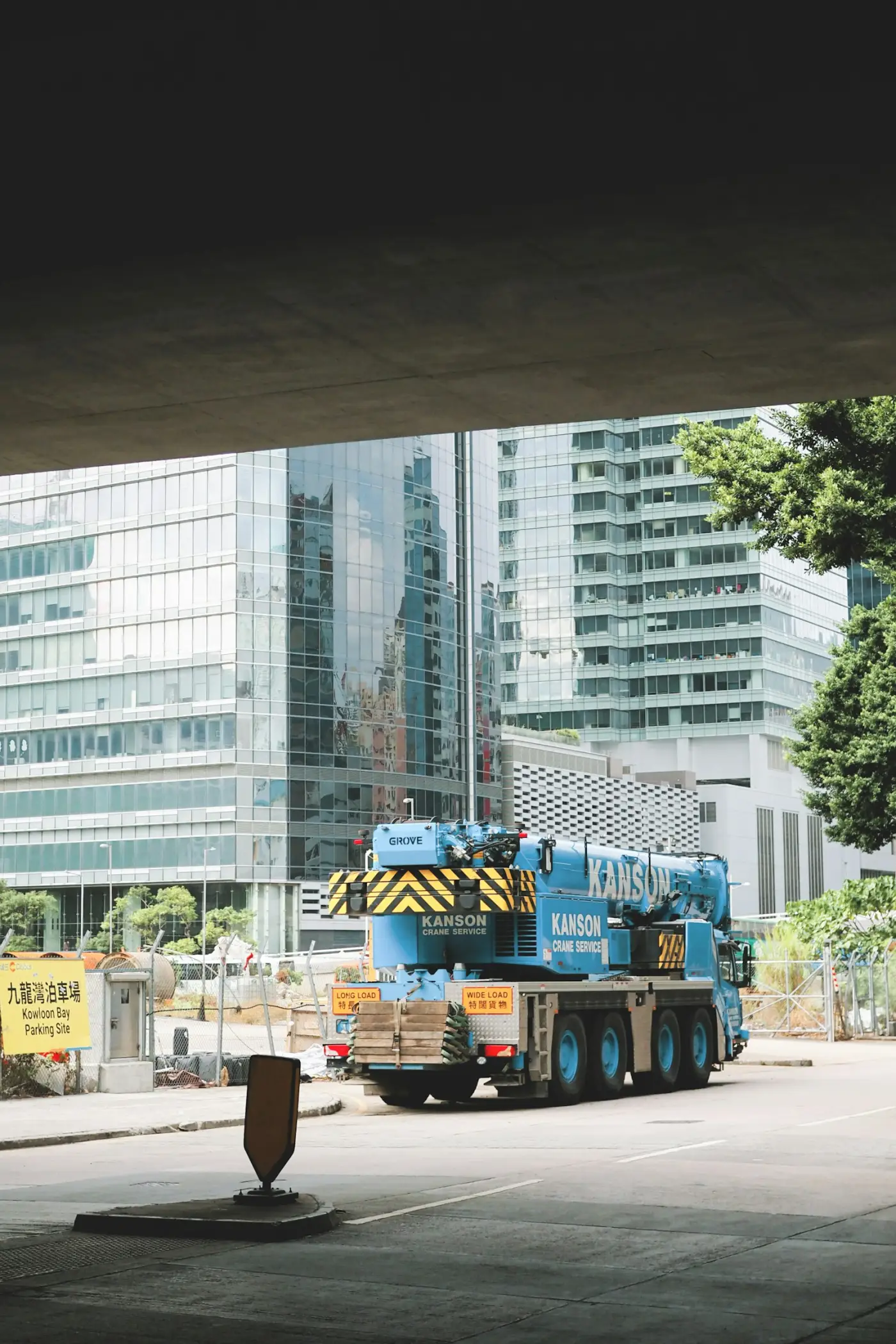
- All-terrain cranes: multi-axle machines that drive at road speed and also handle rough site ground, with high capacities and long booms.
- Rough-terrain cranes: single-cab machines with large tyres for site use; they are usually moved between sites on a trailer.
Mobile crane capacities typically start around 20 to 25 tonnes and go well beyond 100 tonnes for all-terrain models. Every mobile crane works off its load chart, which drops sharply as the boom extends and the radius increases. A truck-mounted loader crane (HIAB) is a different machine again, mainly used for loading and unloading the truck it sits on.
Side-by-side comparison
Figures are typical class ranges; the load chart for the specific machine always governs.
| Factor | Spider crane | Mobile crane |
|---|---|---|
| Typical rated capacity | approx. 1 to 10 t | approx. 20 t to several hundred t |
| Stowed width | from approx. 0.6 m (small models) | approx. 2.5 m and above |
| Access | Doors, goods lifts, ramps, rooftops | Public roads and site roads only |
| Set-up area | A few square metres with outriggers | Large outrigger spread plus space for counterweight and swing |
| Ground pressure | Low, spread on four pads | High point loads on outrigger pads |
| Typical hook height | Up to approx. 20 to 30 m on larger models | Much higher, depending on boom and jib |
| Indoor use | Yes, with electric or battery models | No |
| Best for | Glazing, indoor plant, tight sites | Heavy lifts, long radius, steel, plant setting |
Typical jobs for each crane
Spider crane jobs
- Glass and curtain-wall installation: with a vacuum lifter, a spider crane can place glazing panels inside atriums, malls and lobbies.
- Indoor plant and equipment: moving AHUs, chillers, generators and switchgear inside basements, plant rooms and mezzanines.
- Villa and landscape projects: lifting stone, pool equipment or steel over walls into gardens that a truck cannot reach.
- Rooftop work: craned up in pieces or taken up in a goods lift, then used to lift plant on the roof.
- Heritage and occupied buildings: quiet electric operation and low floor loading reduce disruption.
Mobile crane jobs
- Steel erection on warehouses, sheds and frames.
- Heavy plant setting: transformers, large generators, tanks and precast elements.
- Lifts over buildings or at long radius from the road.
- Loading and unloading heavy items from trailers at ports and industrial yards in areas such as Jebel Ali and Mussafah.
- Short-duration lifts where the crane arrives, lifts and leaves the same day.
Ground, floor and access checks
For a spider crane, the key questions are floor capacity and access route. Even though the machine is light, each outrigger concentrates the lifting load on a small pad. Ask a structural engineer to confirm that suspended slabs, mezzanines and podium decks can carry the outrigger loads, and use the correct spreader mats. Measure every door, corridor, ramp gradient and goods-lift dimension and weight limit along the route.
For a mobile crane, the questions are road access, set-up space and ground bearing. Check the route for height and weight restrictions, confirm there is space to fully extend the outriggers (lifting on partially extended outriggers reduces capacity and must follow the load chart for that configuration), and check for underground services, backfill, manholes and basement walls under the pads. Overhead power lines need a clear exclusion zone.
Planning the lift
Whichever crane you choose, a safe lift needs:
- A lift plan from a competent person, with load weight, radius, crane configuration and ground assessment. Heavier, complex or tandem lifts usually need a more detailed plan.
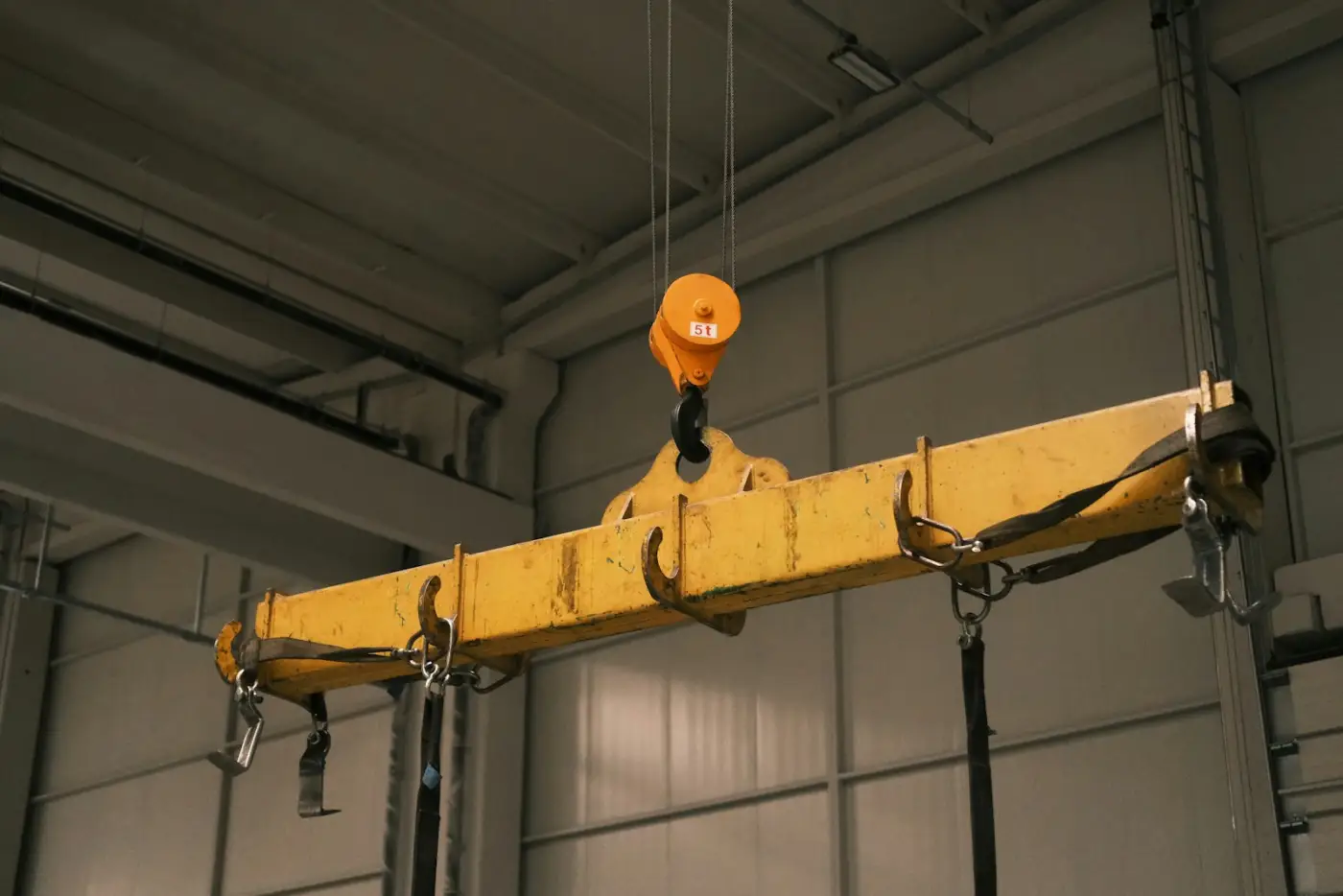
- The right rigging. Use certified lifting belts and slings with a safe working load suited to the load and the slinging angle. Our guide to lifting sling colour codes and safe working load explains how to read the labels.
- Competent people. A trained crane operator, a slinger/signaller and a lifting supervisor where the site requires one. APEX PRO can supply certified operators with valid third-party operator cards.
- Current inspection certificates for the crane and the lifting accessories, normally third-party inspection (TPI) in the UAE.
- Weather limits. Check the wind limit in the crane manual. Spider cranes and long booms are both sensitive to wind, and large panels such as glass catch it easily.
Requirements differ between projects, so check your main contractor's lifting procedure and HSE plan before mobilising.
Cost and hire thinking
Comparing only day rates can mislead. A spider crane may be cheaper per day but slower per lift, and it may need extra days for multiple set-ups. A mobile crane can finish heavy lifts in hours but may carry mobilisation, permits and road-closure costs. Compare the total cost of the lift, including set-up time, rigging, operator, transport and any traffic or permit arrangements. Ask for delivery, fuel and operator to be priced separately so quotes are comparable.
Quick decision checklist
- What is the heaviest load, including rigging?
- What is the radius from the crane's centre to where the load lands?
- Can a truck reach the set-up point, or must the crane pass through doors or lifts?
- What can the ground or slab carry under the outriggers?
- Indoor or outdoor? Are diesel emissions or noise restricted?
- One heavy lift, or many light lifts over several days?
If the answers point to light loads and tight or indoor access, choose a spider crane. If they point to heavy loads, long radius or open-air lifts with good road access, choose a mobile crane.
Need one on site?
APEX PRO supplies spider cranes and mobile cranes across all seven emirates from our office in Saih Shuaib 2, Dubai, on daily, weekly, monthly or project hire, dry or with an operator, with current TPI certificates and a method statement on request. See our spider crane rental and mobile crane rental pages, or send the load weight, radius and site location through our contact page for a written quote.
Frequently asked questions
What is a spider crane used for?
A spider crane is used for lifts where a conventional crane cannot get access, such as inside buildings, on rooftops, in atriums and in walled gardens. Typical jobs include glass and curtain-wall installation with a vacuum lifter, placing indoor plant like AHUs and switchgear, and lifting materials over walls on villa and landscaping projects. Its tracks and narrow body let it pass through doorways.
How much can a spider crane lift?
Spider cranes typically range from under one tonne to around eight to ten tonnes maximum rated capacity, depending on the model. That maximum only applies at very short radius with outriggers fully deployed. Capacity falls quickly as the boom extends, so the load chart for the specific machine, at your actual radius, determines what it can safely lift.
Can a spider crane go through a door?
The smallest spider cranes are around 0.6 metres wide when stowed, which is narrow enough for a standard single doorway. Mid-size and larger models are wider and may need double doors or a larger opening. Check the stowed width, height, length and weight of the exact model against every door, corridor, ramp and goods lift on the route before booking.
Is a spider crane cheaper than a mobile crane?
Often per day, but not always per job. A spider crane can avoid road closures, permits and large set-up areas, and it can work indoors. However, it lifts less and may need several set-ups. A mobile crane can complete heavy lifts quickly. Compare the total cost of the lift, including transport, set-up time, rigging and operator, rather than the day rate alone.
What are the main types of mobile crane?
The common types are truck-mounted cranes, which drive on roads on a commercial chassis; all-terrain cranes, which travel at road speed and also handle site ground with high capacities; and rough-terrain cranes, built for site use and usually moved between jobs on a trailer. Truck-mounted loader cranes, often called HIAB, are a separate category used mainly for loading.
Do spider cranes need outriggers?
Yes. Spider cranes lift on their four outriggers, which spread the load and level the machine. Some models allow limited pick-and-carry or on-track lifting at much reduced capacity, but most lifts are done on outriggers. Each outrigger pad applies a concentrated load, so check the floor or ground can carry it and use the correct spreader mats.

APEX PRO hire desk
Written by the team that delivers, certifies and services equipment across the UAE every day. About APEX PRO.